UX Redesign · Game UI
Personal · Spec Work
2021
Rainbow Six Siege: Scoreboard Redesign
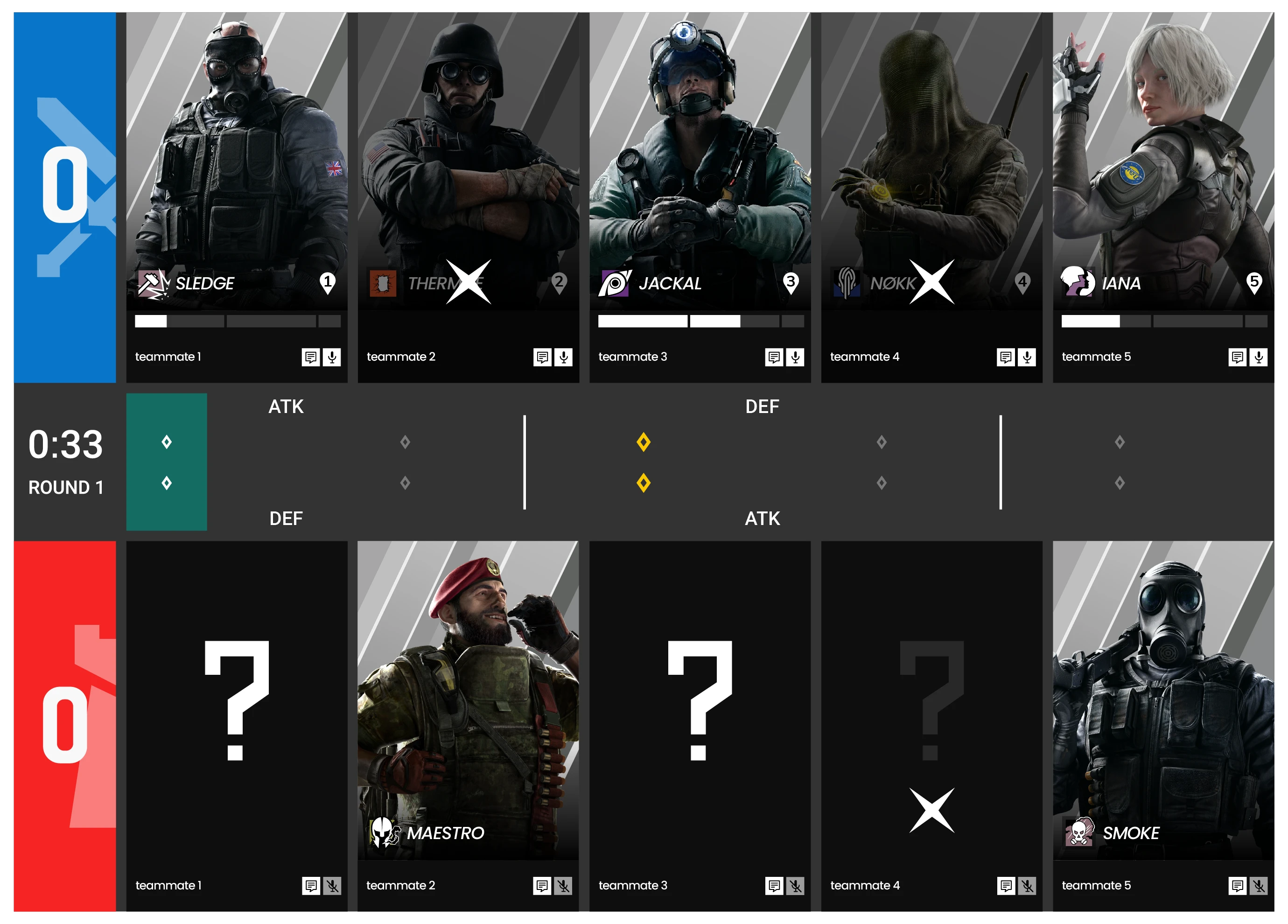
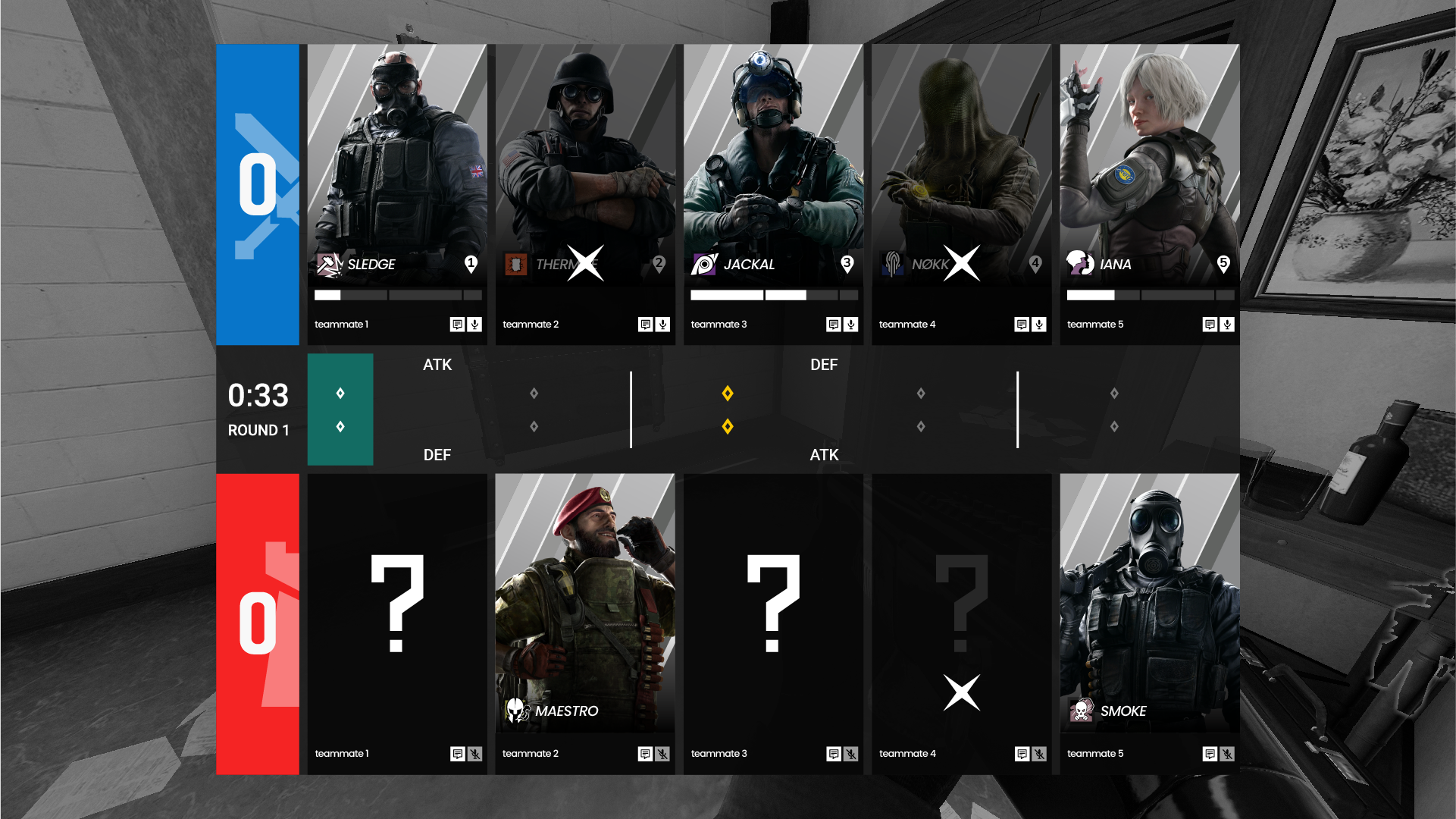
A scoreboard redesign that shifts emphasis from individual performance rankings to team awareness — to reduce cognitive load and the culture of blame that high-stats players leverage against teammates.
The Problem
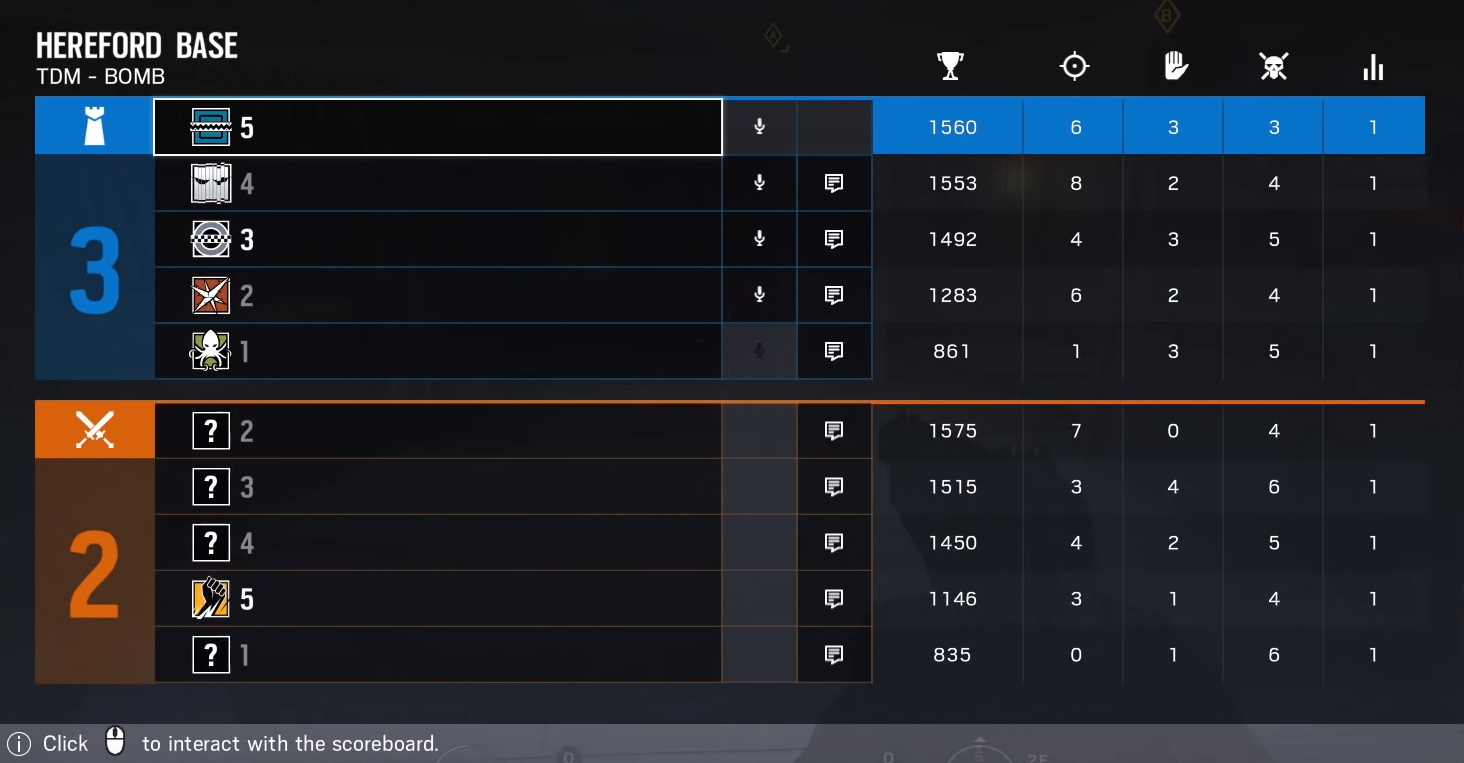
Rainbow Six Siege is a team-based tactical shooter. But the in-match scoreboard undermines that entirely — it surfaces a ranked table of teammates sorted by kills, headshots, and damage. In a game where the objective is to win as a unit, the UI constantly frames you as individuals competing against each other.
The community is quick to turn on a struggling teammate. The scoreboard gives them data to point at. That pressure changes how people play: chasing kills instead of executing roles, avoiding risk to protect their score.
Analysis
Rebuilt the existing scoreboard to understand what information it prioritizes and how that hierarchy shapes behavior. Three structural problems stood out:
- Personal score leads every row — first thing visible when you tab out mid-round
- Operator identity is small and secondary — you see a number before you see a person
- Enemy team information is almost nonexistent — no tactical value at all
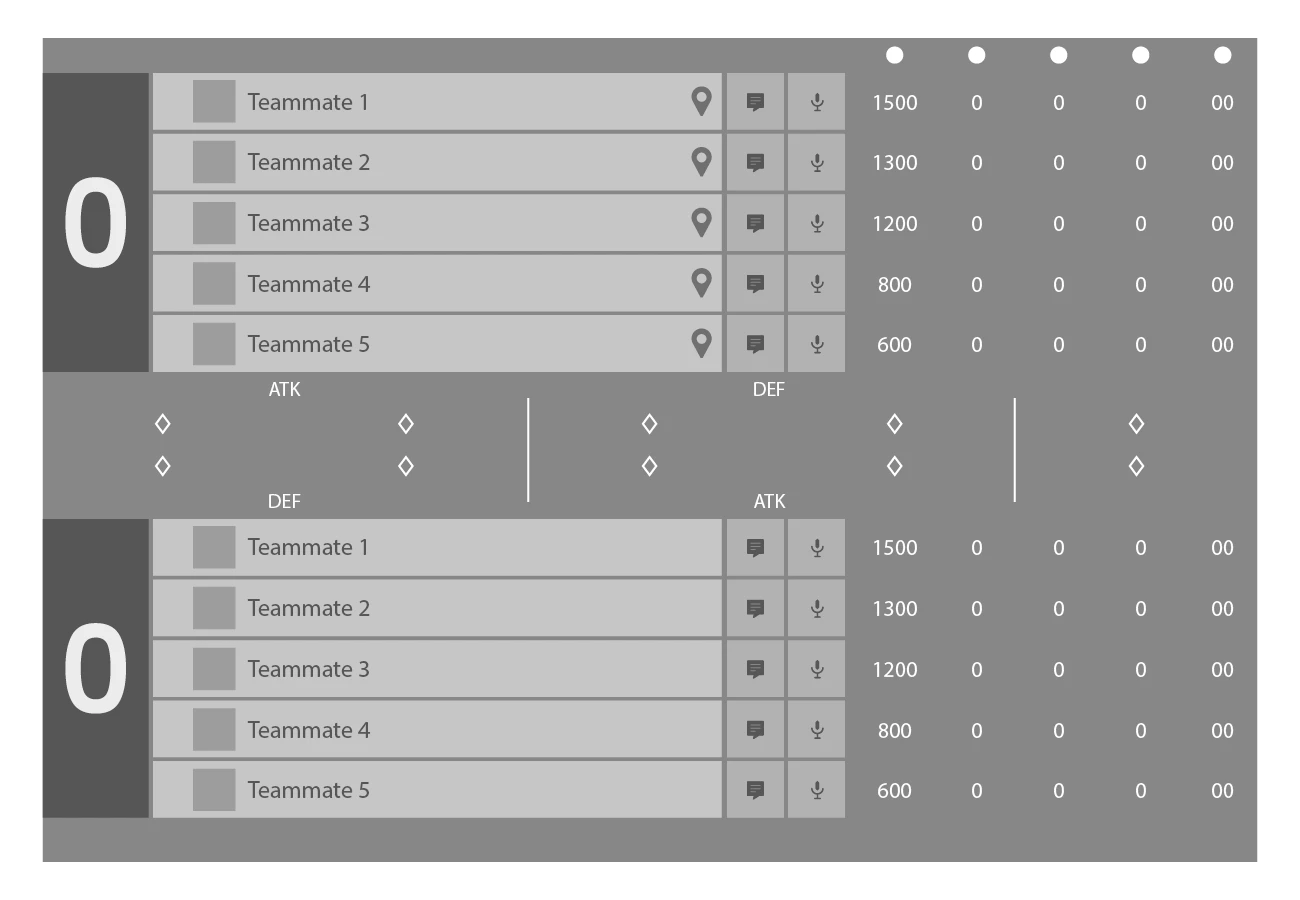
Redesign Direction
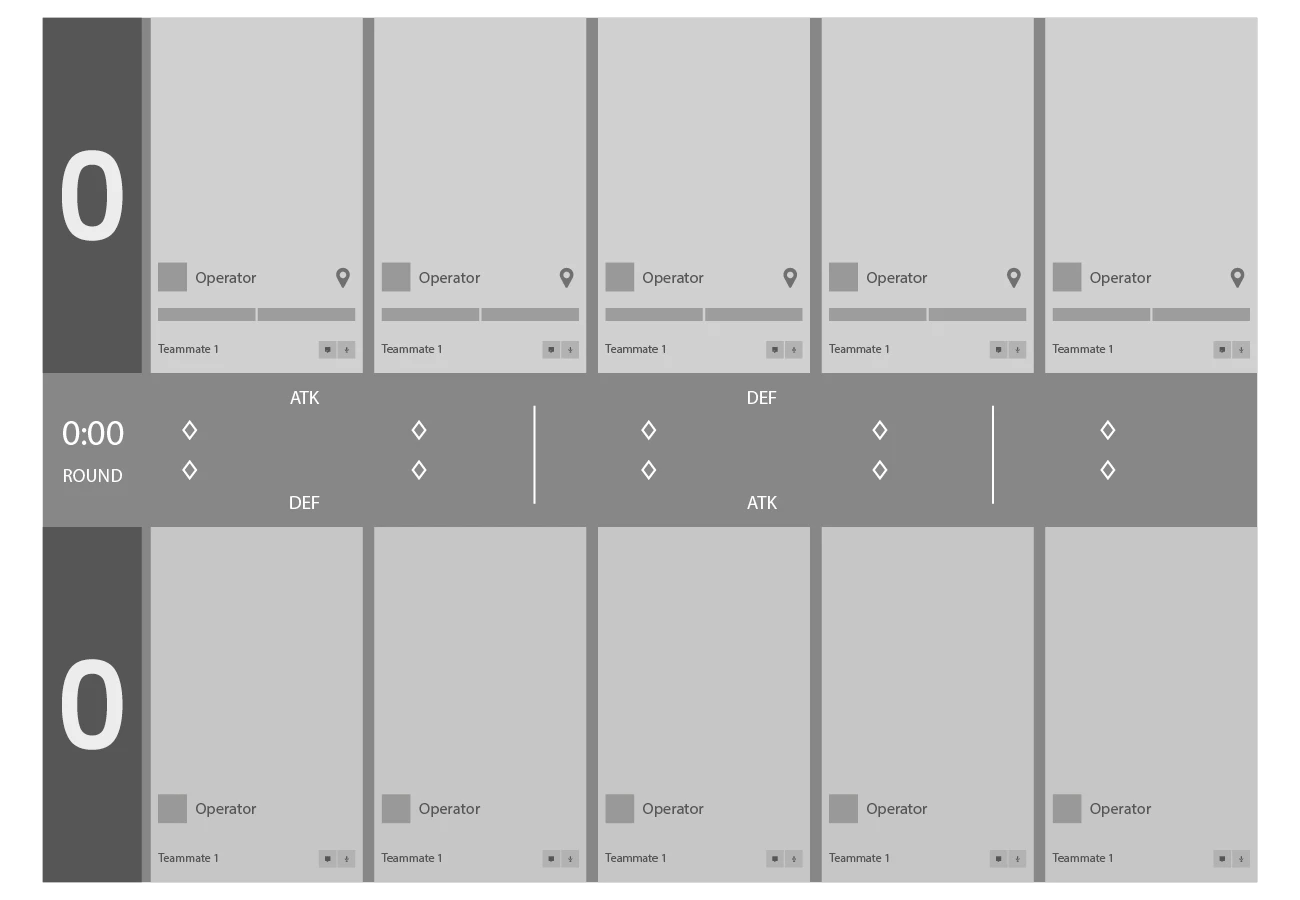
The scoreboard should answer two questions instantly: Who are my teammates? What do I know about the opposing team?
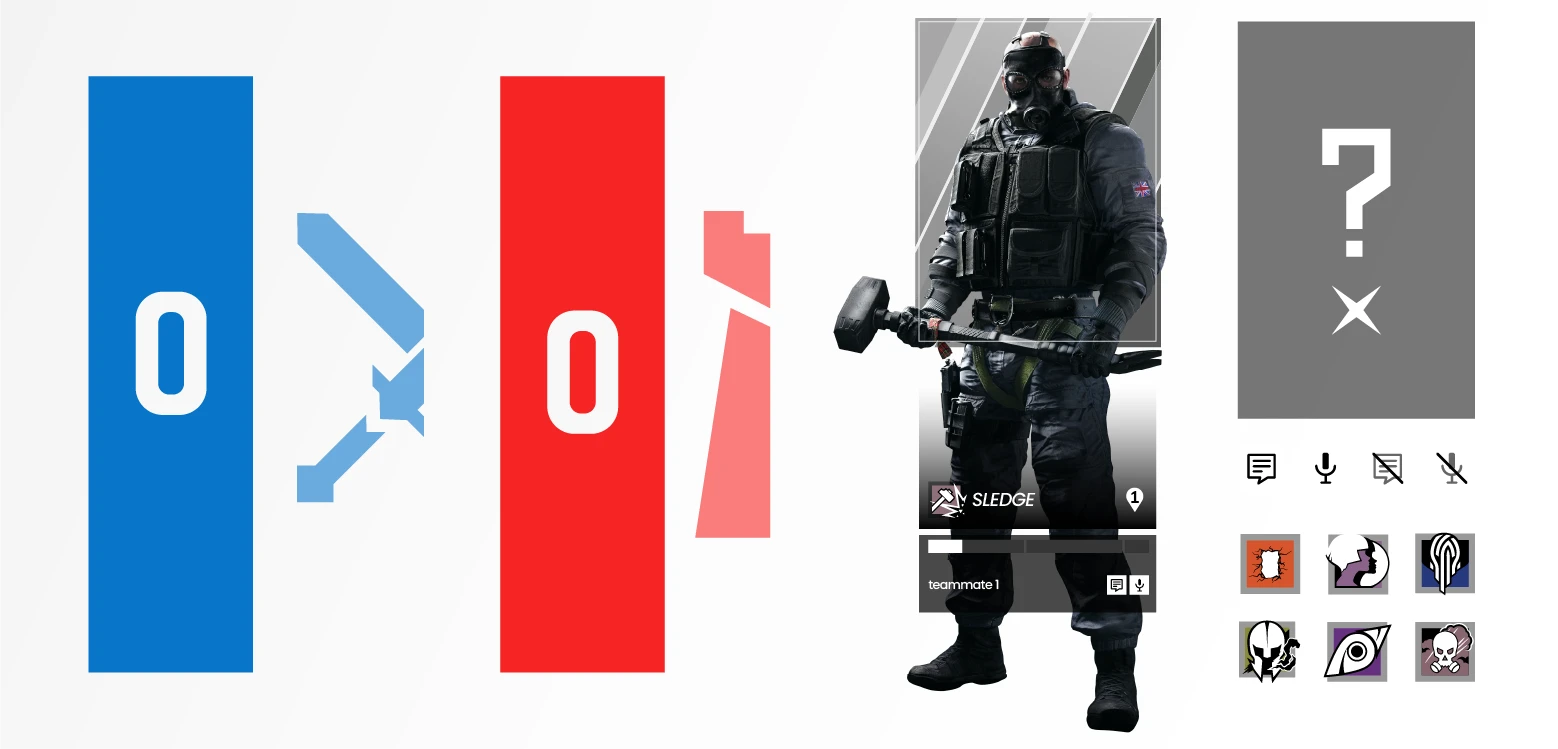
- Operator-first cards — large, identifiable, with role context and alive/eliminated state at a glance
- Stats as secondary — supporting information, not the primary hierarchy
- Enemy section — operators identified mid-round, turning the board into a tactical reference
- Tight typography and contrast — readable in under 2 seconds mid-round
Outcome
A concept that reframes the scoreboard as a tactical reference instead of a performance ranking. The same data, reorganized around what actually matters during a round.
Not shipped, not tested with users. But the exercise surfaced something worth noting: toxic behavior in competitive games often starts in the UI. The scoreboard teaches players how to relate to their teammates — and the original one taught blame.