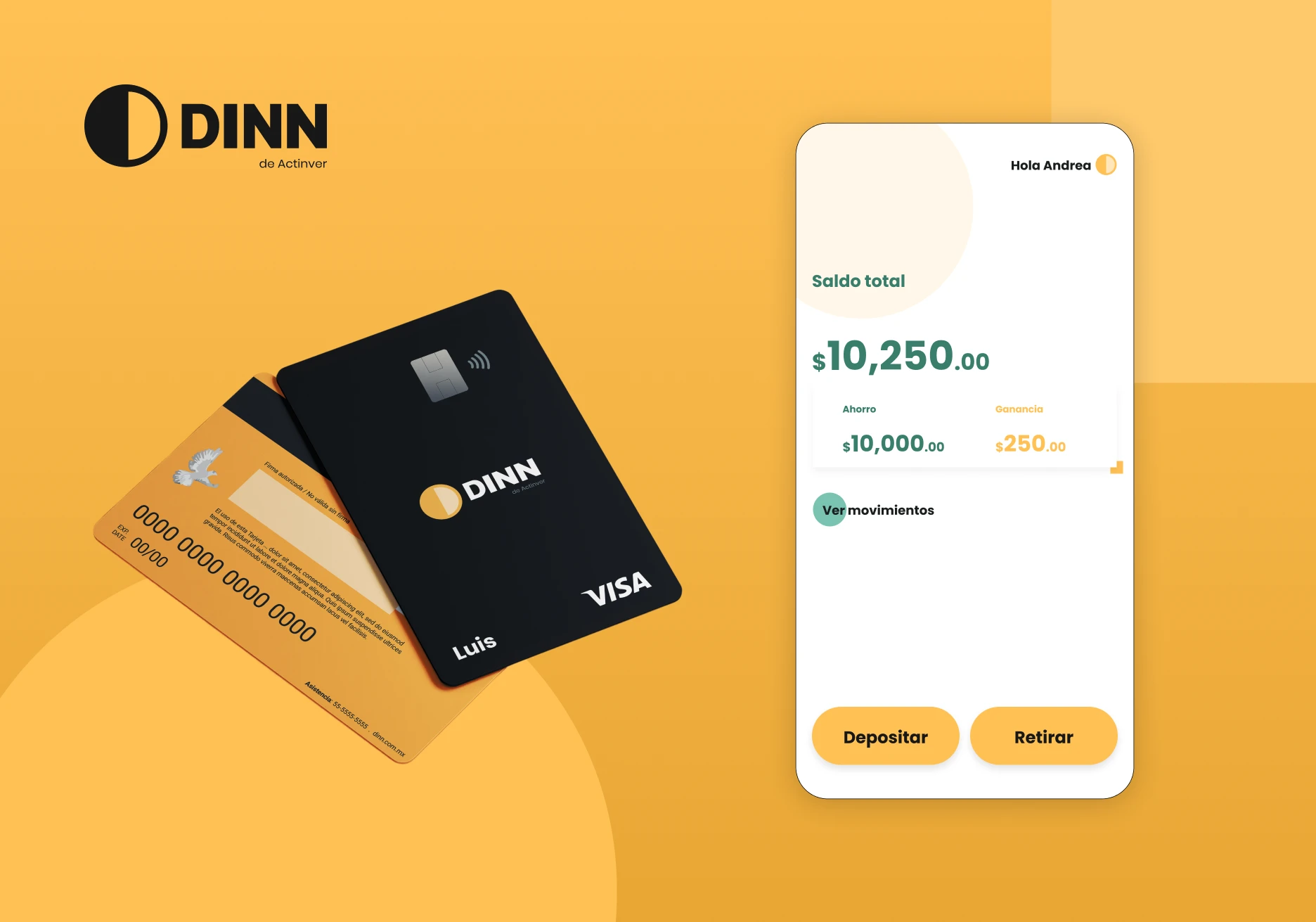
Brand + Product + Strategy

Building
Fintech
From Zero

Brand + Product + Strategy

Building
Fintech
From Zero

Role

Product & Visual Designer (Founding Team)

Year

Nov 2018 – Oct 2019

Sector

Fintech

Overview

205 users after two years. The instinct was to pivot. Instead, we did the research

205 users after two years. The instinct was to pivot. Instead, we did the research

DINN 1.0 launched in 2017 and had 205 users by early 2019. The business context: Actinver's average client was 54 years old. More than half of AUM held by clients over 60. The millennial segment was a real and unaddressed opportunity. DINN was Actinver's answer.

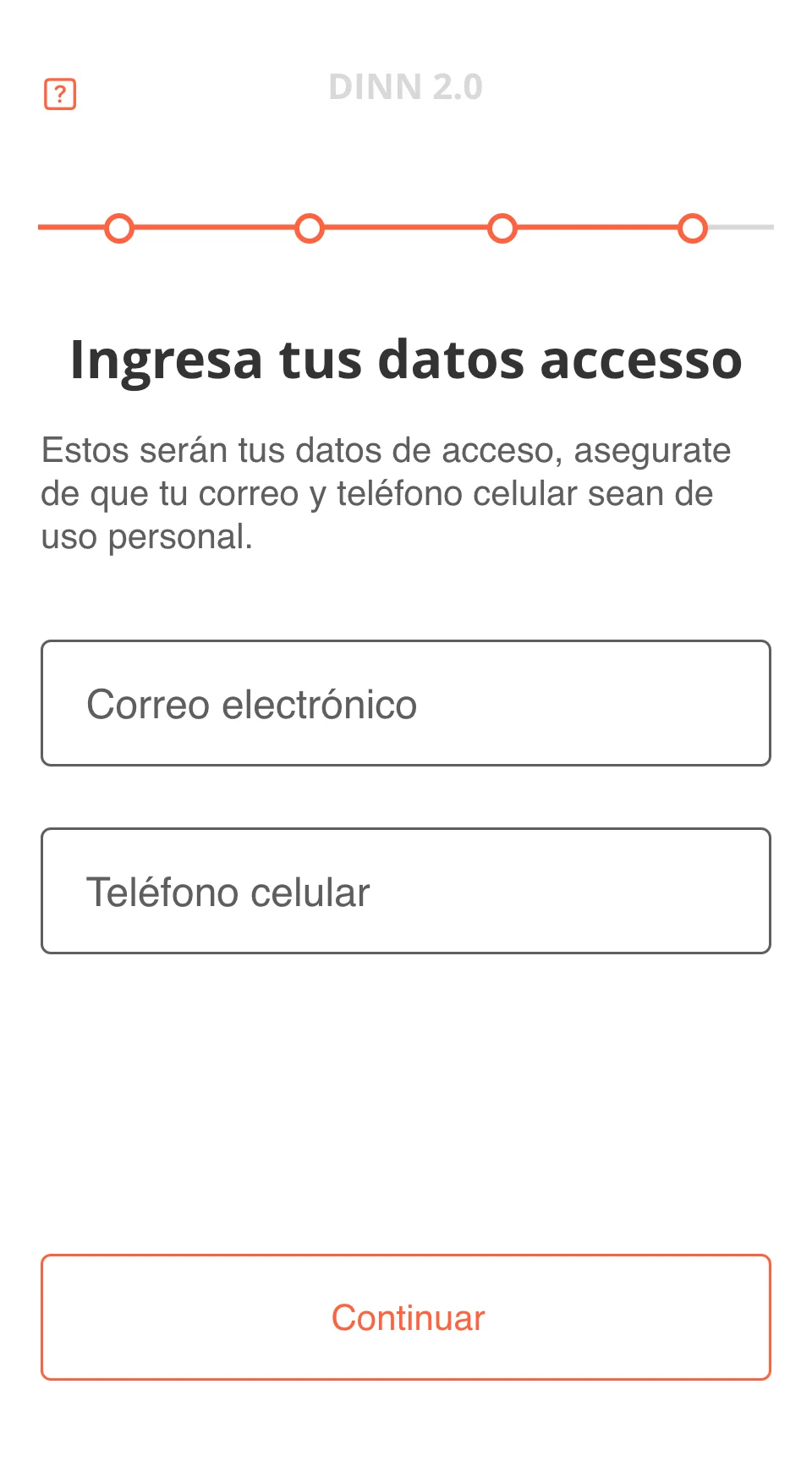
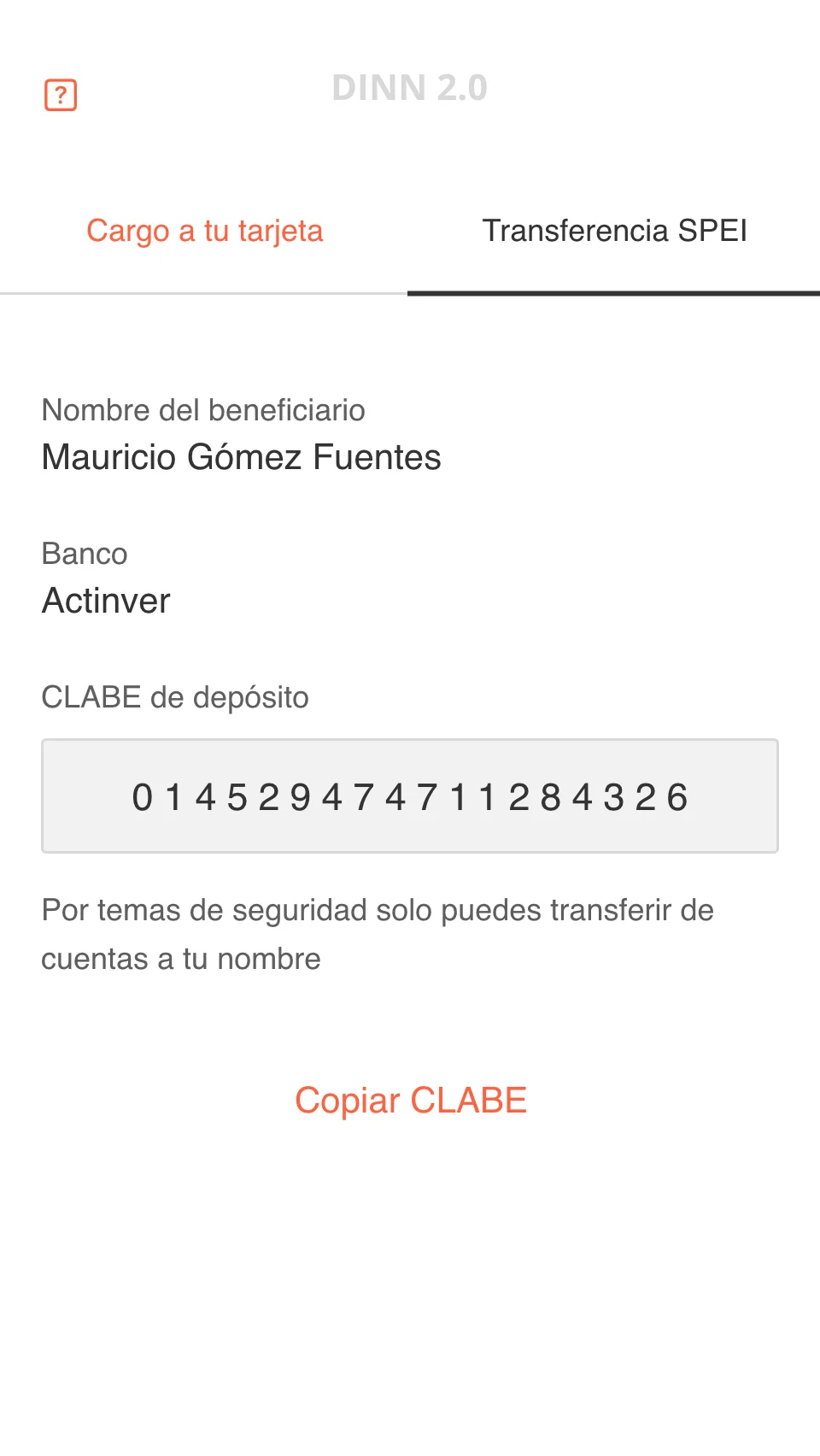
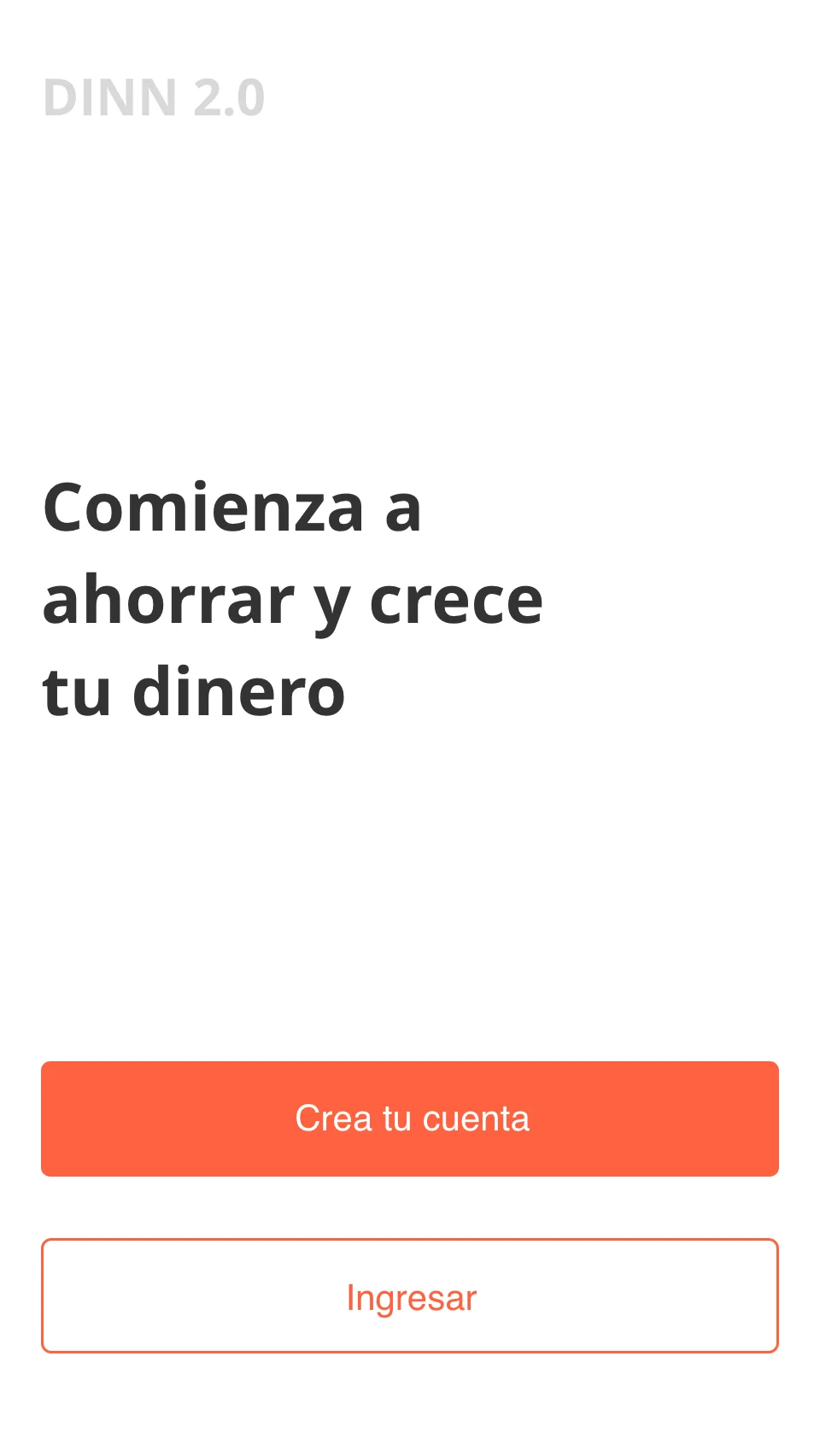
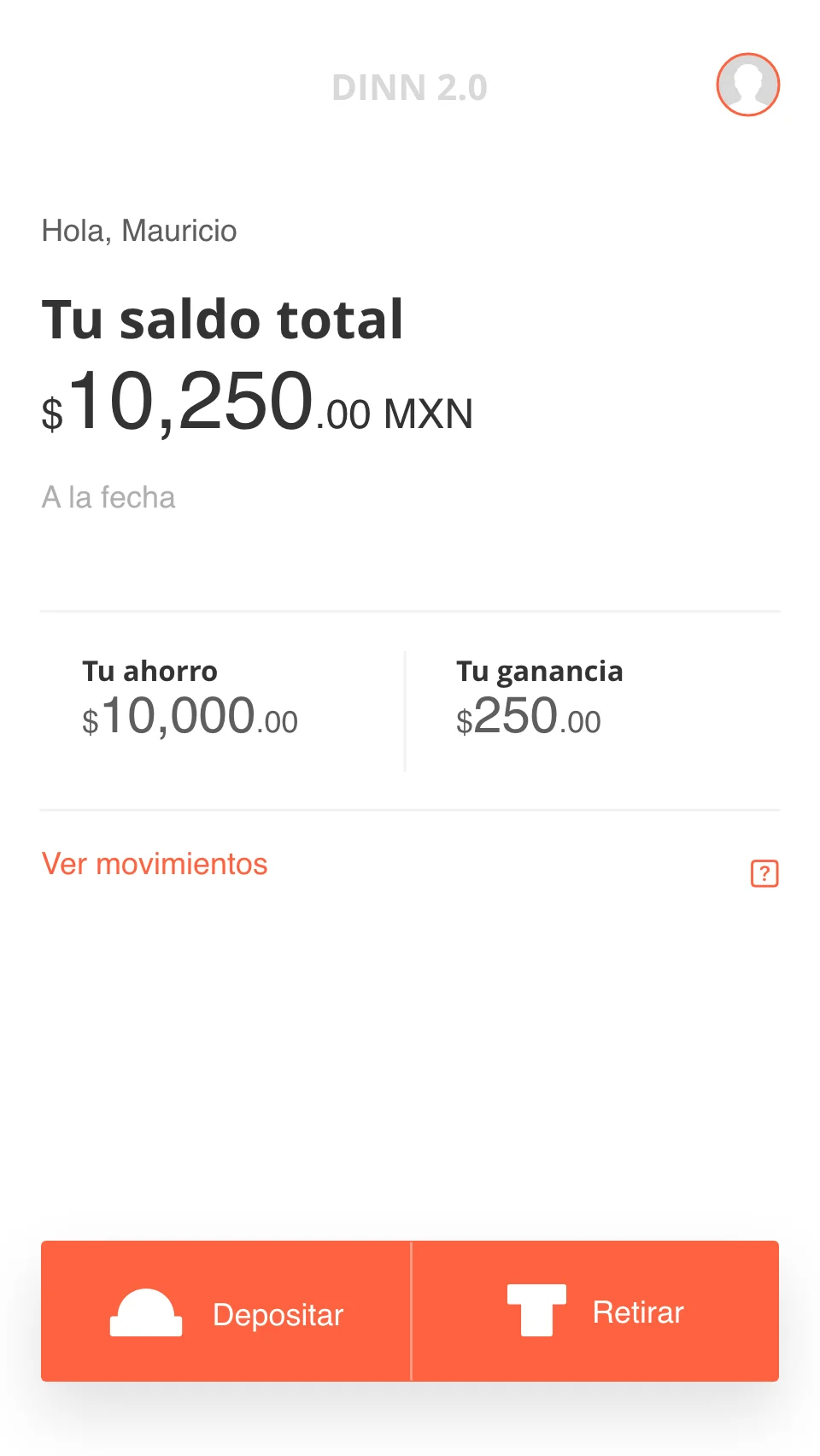
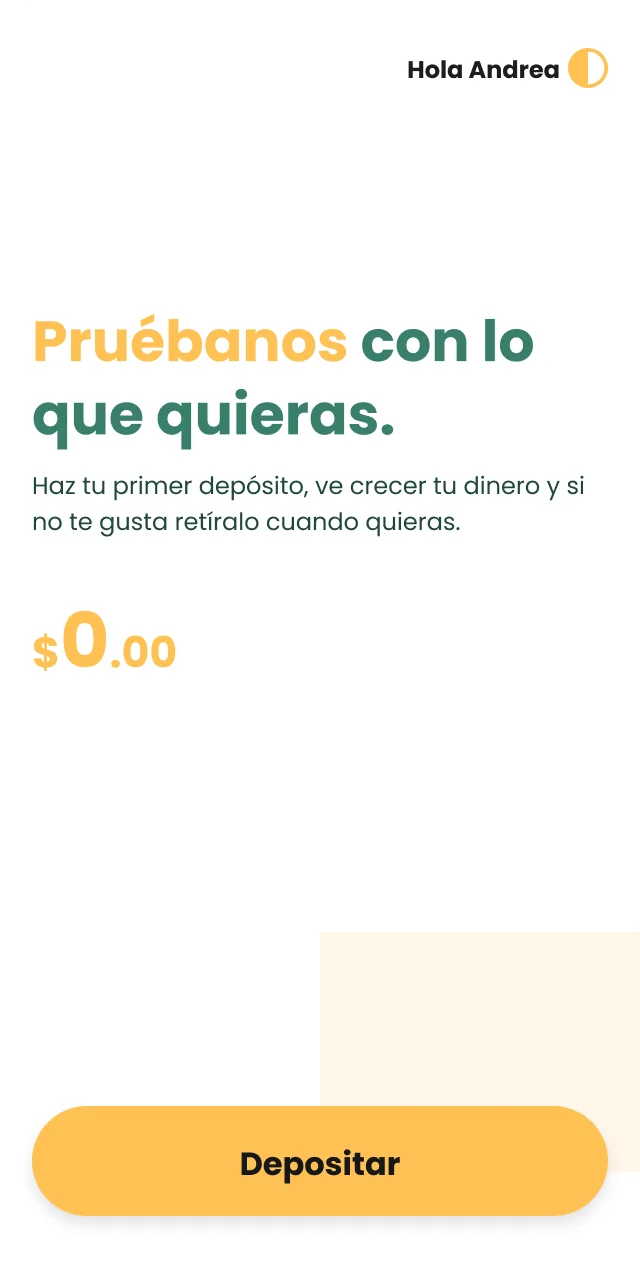
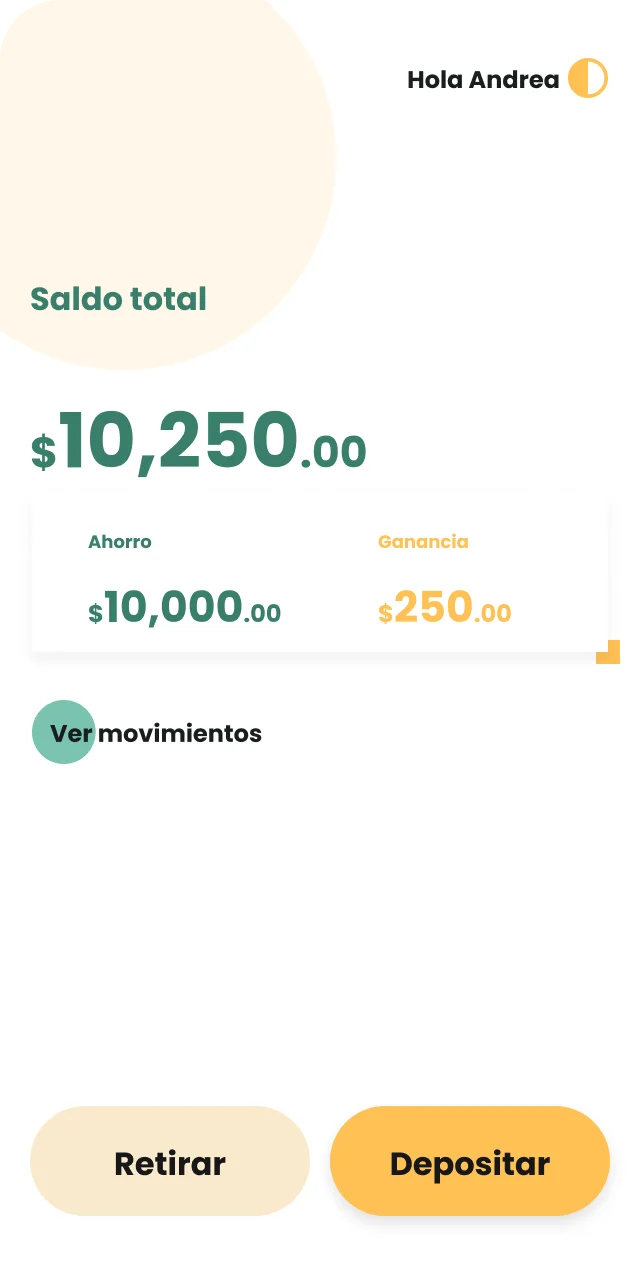
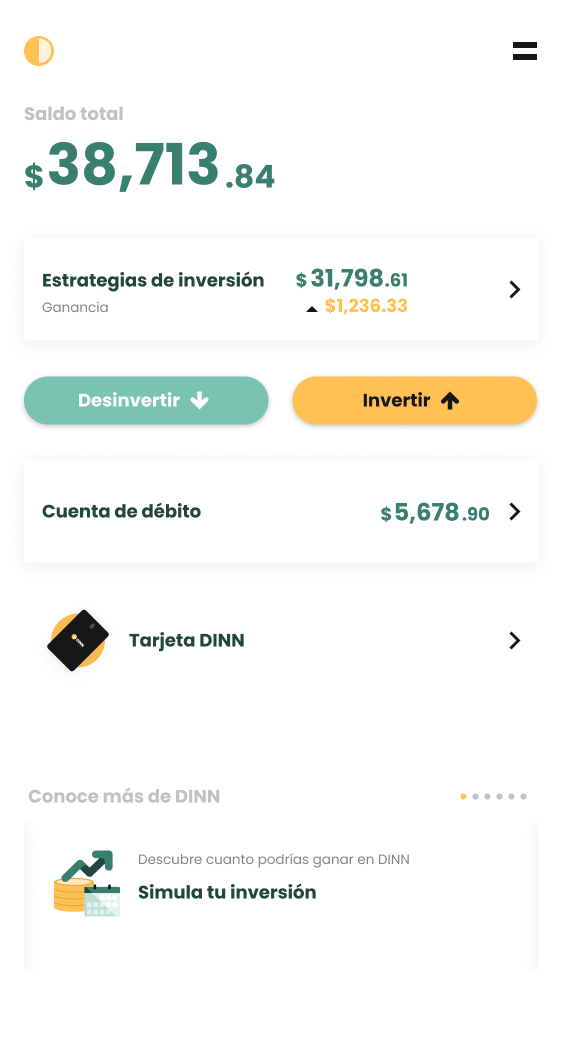
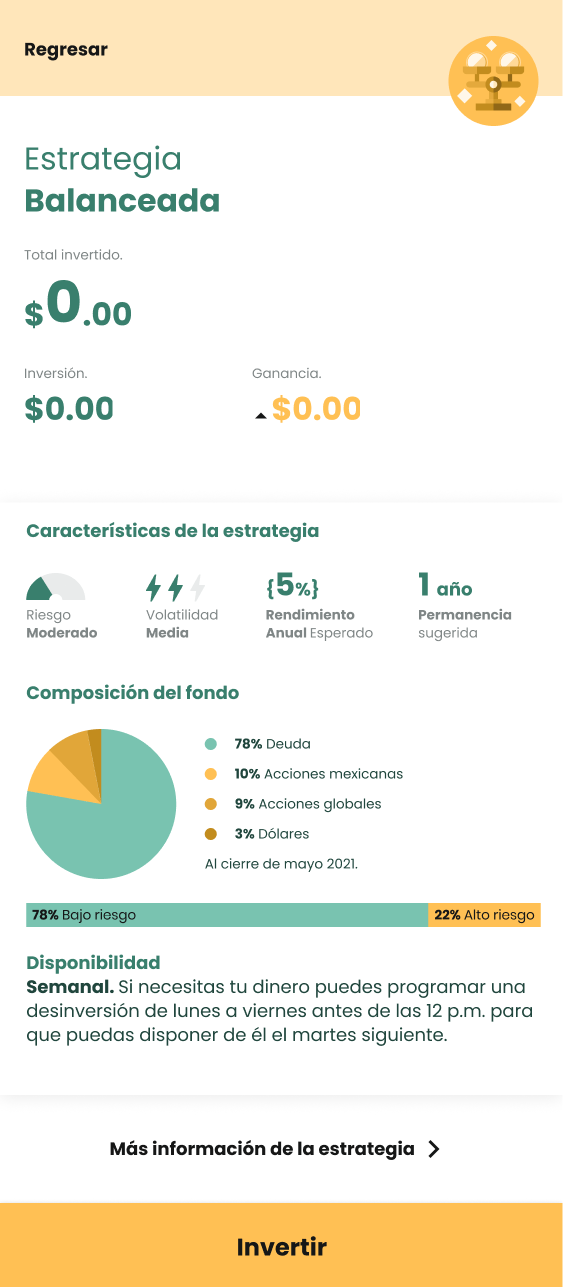
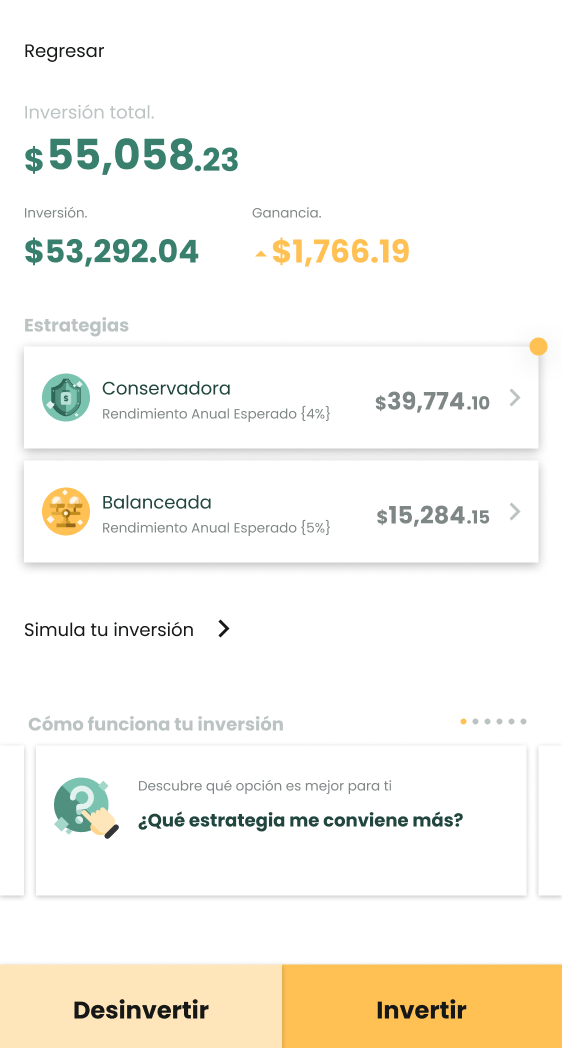
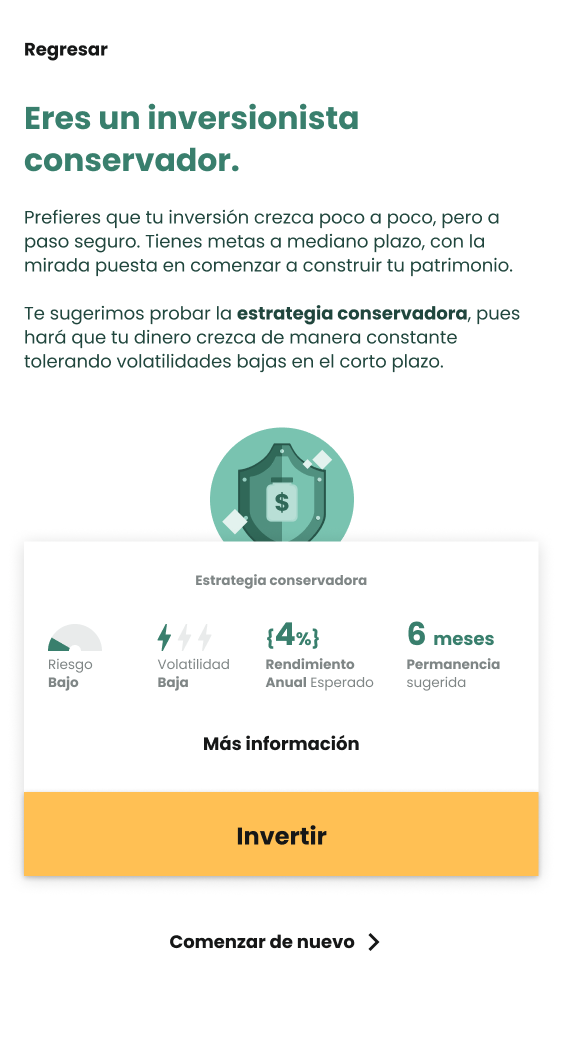
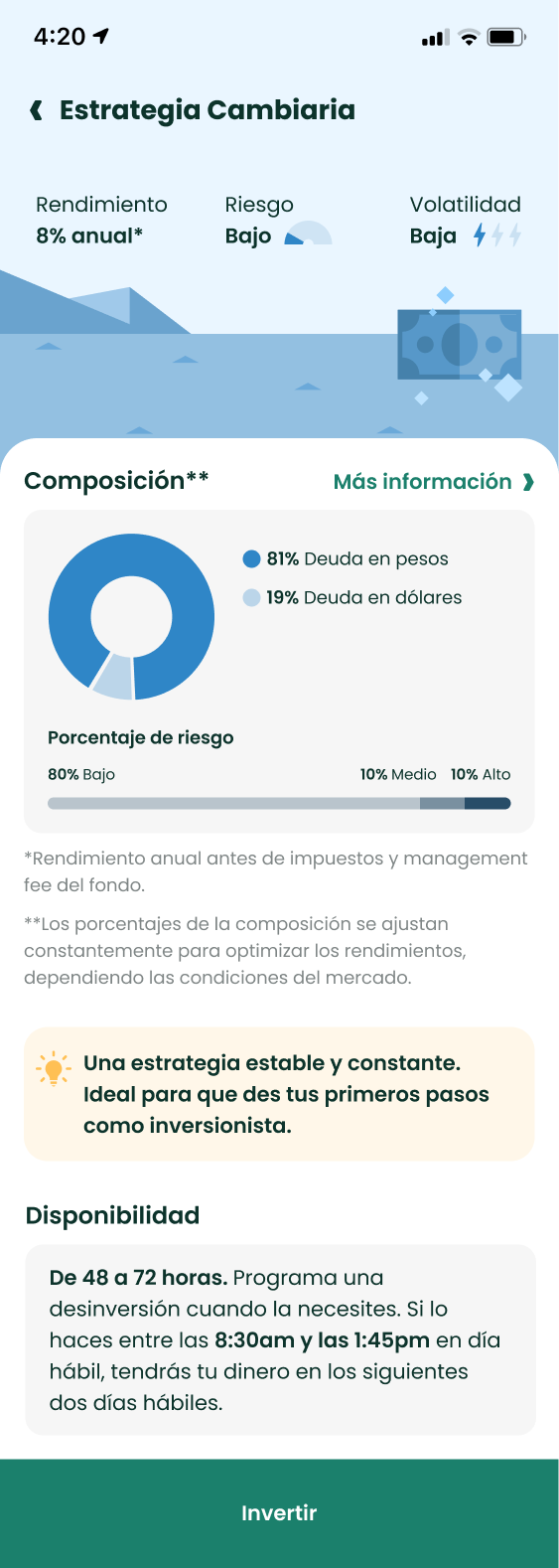
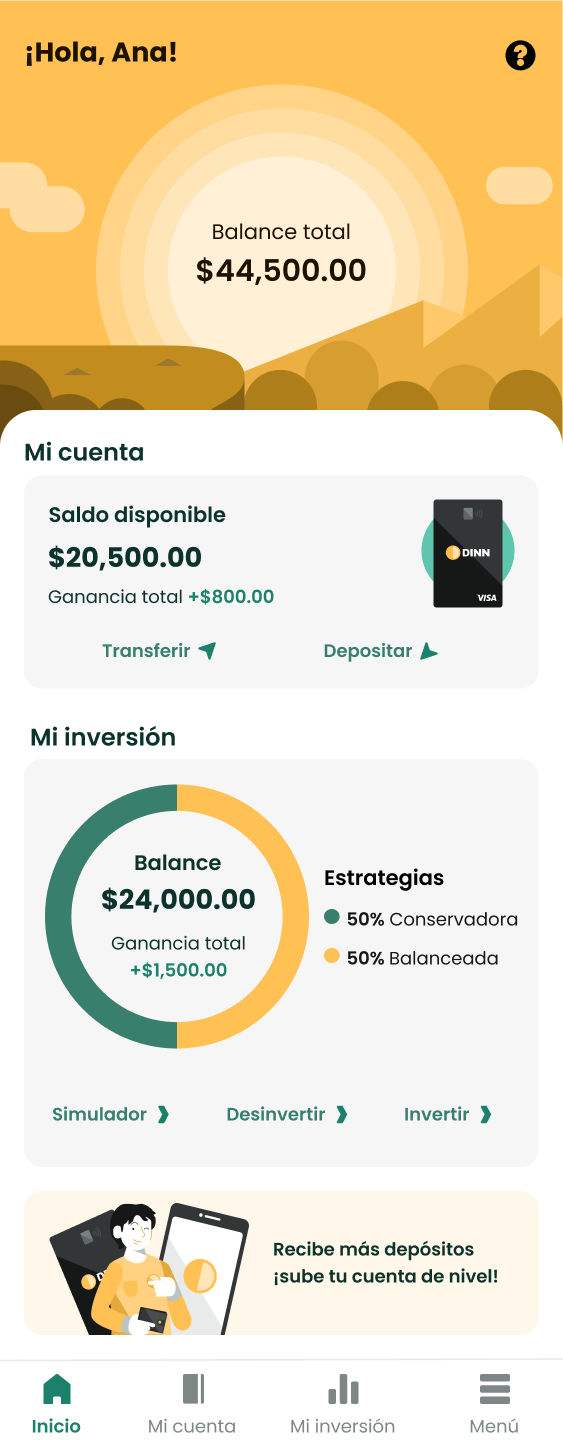
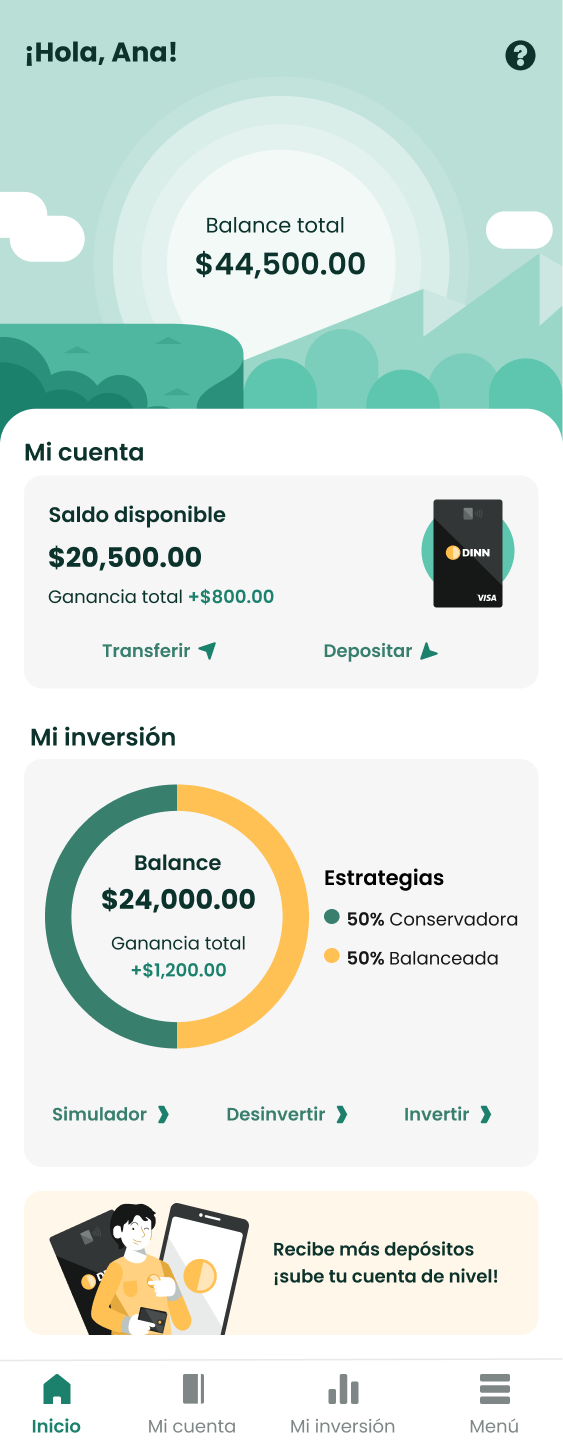
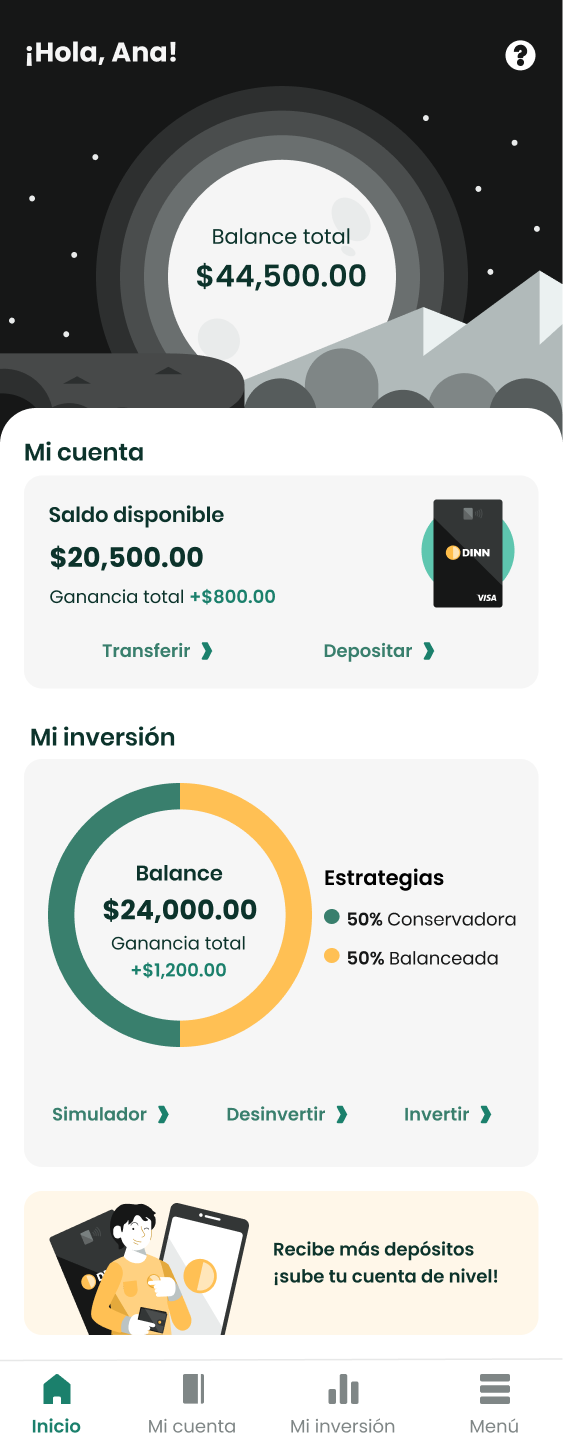
As part of the founding team, I was involved from research through brand definition, product conceptualization, and launch designing the brand, the identity system, and the first versions of the product.

Research

Every request ended up in one person's email. The system was the person

Every request ended up in one person's email. The system was the person

The assumption: young people don't invest because they don't have money, prefer to spend it, or think it's too complicated. That hypothesis was wrong.

72% of young Mexicans 18–35 already save. Of those, 68% keep money in a bank account. Only 32% invest. And 70% said they don't know enough about investing to start. The barrier wasn't money or interest. It was an understanding problem.

Competitive benchmark of 24 fintechs (14 global, 10 Mexican): almost every competitor communicated in functional territory rates, features, security badges. Nobody had claimed the emotional space.

Core Decisions

Don't build for investors. Build for savers who don't know they can invest

Don't build for investors. Build for savers who don't know they can invest

Own the emotional territory no competitor was claiming


Brand House built around: Purpose Create the habit of investing. Territory Simplicity. Personality Mentor.


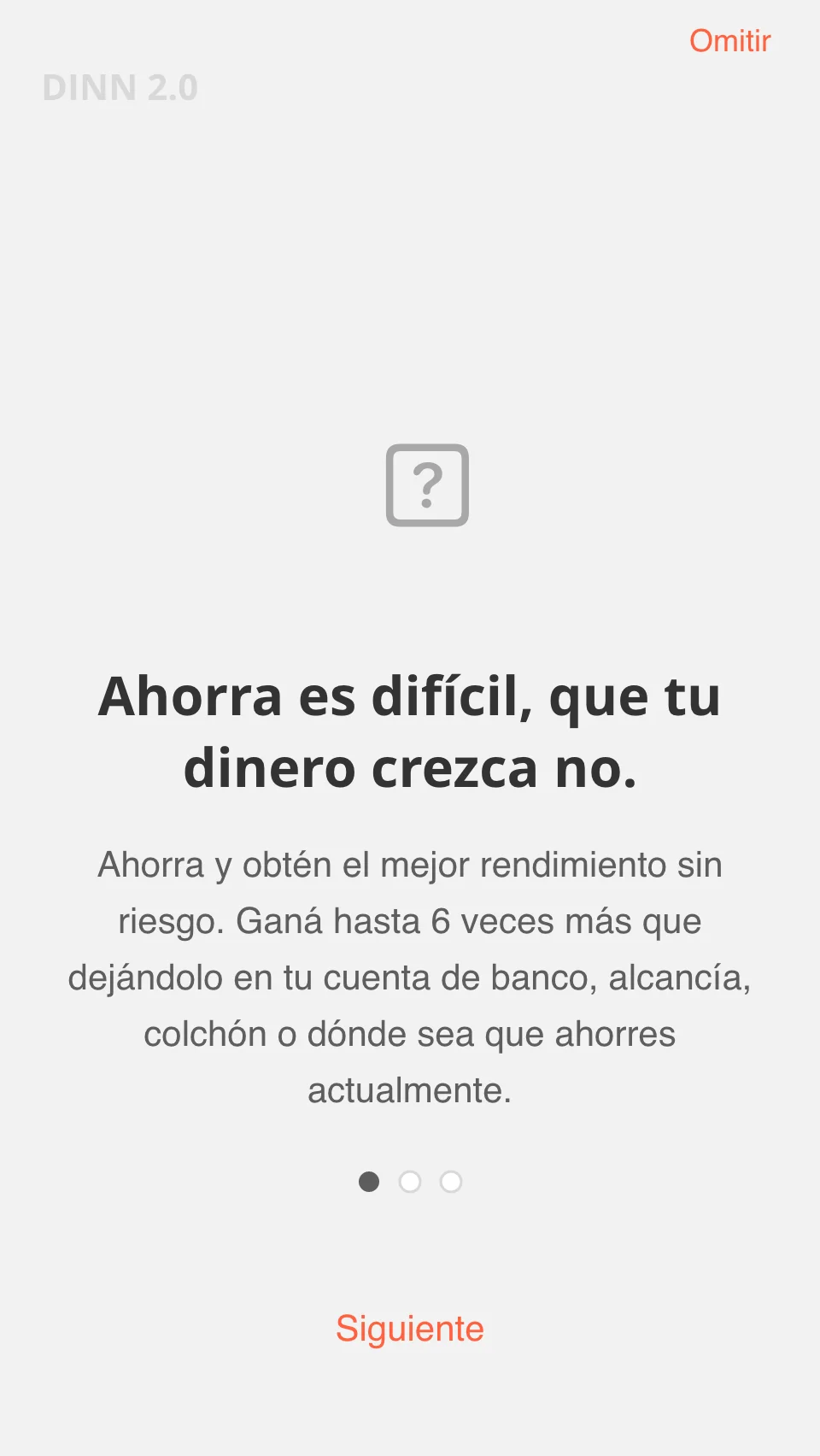
Tagline: "Que tu dinero crezca contigo."

Design the behavioral change, not just the product


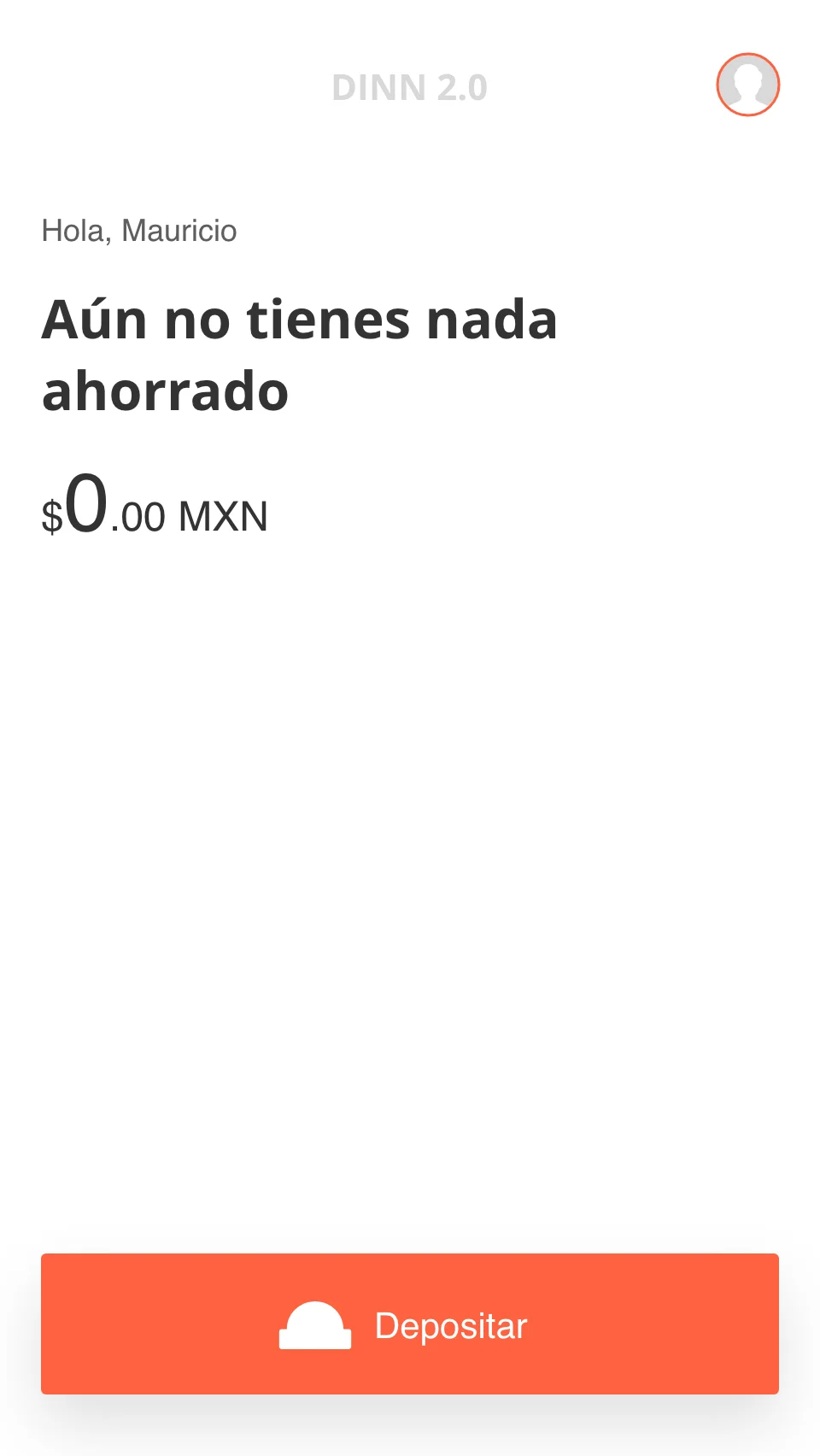
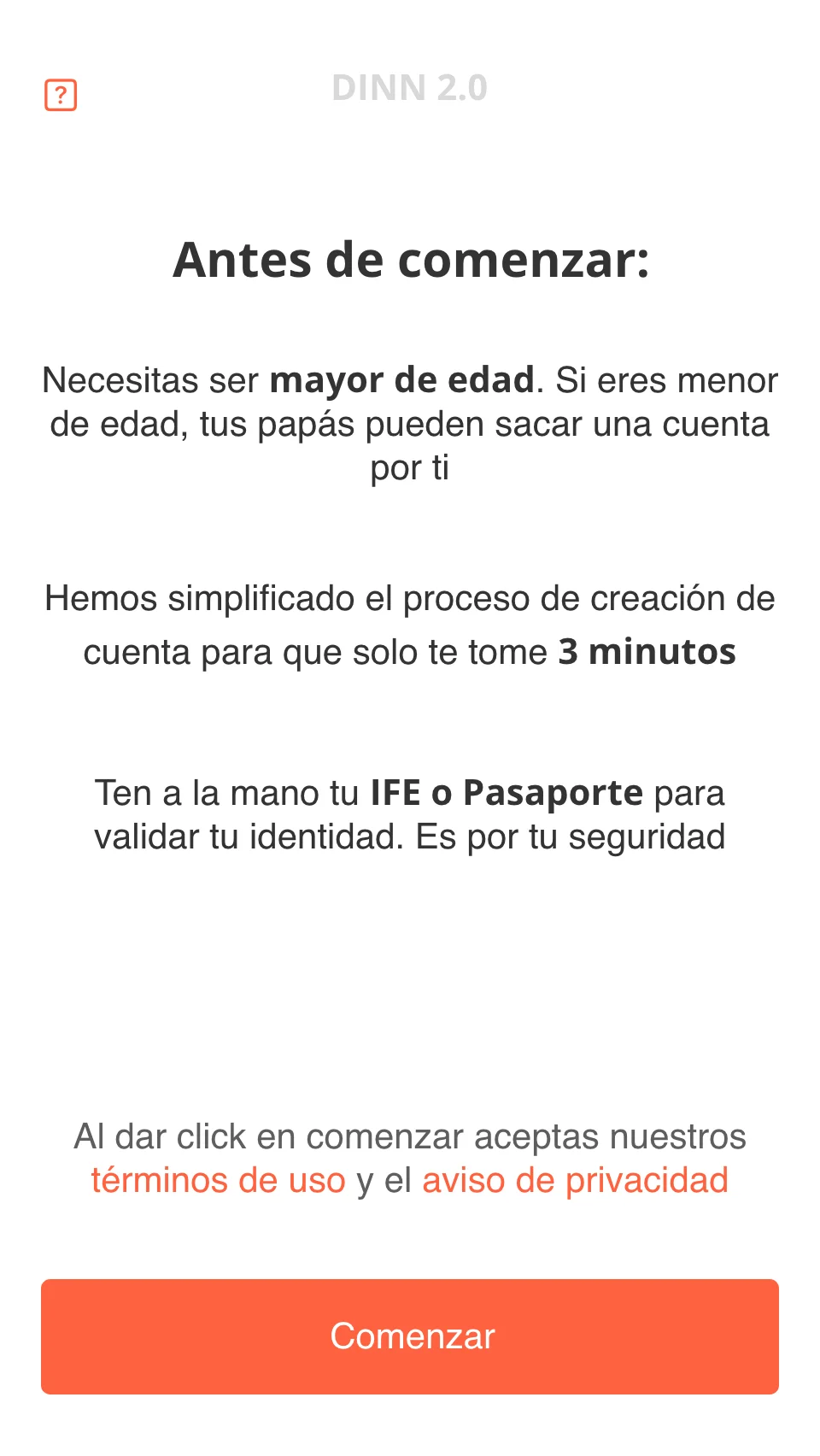
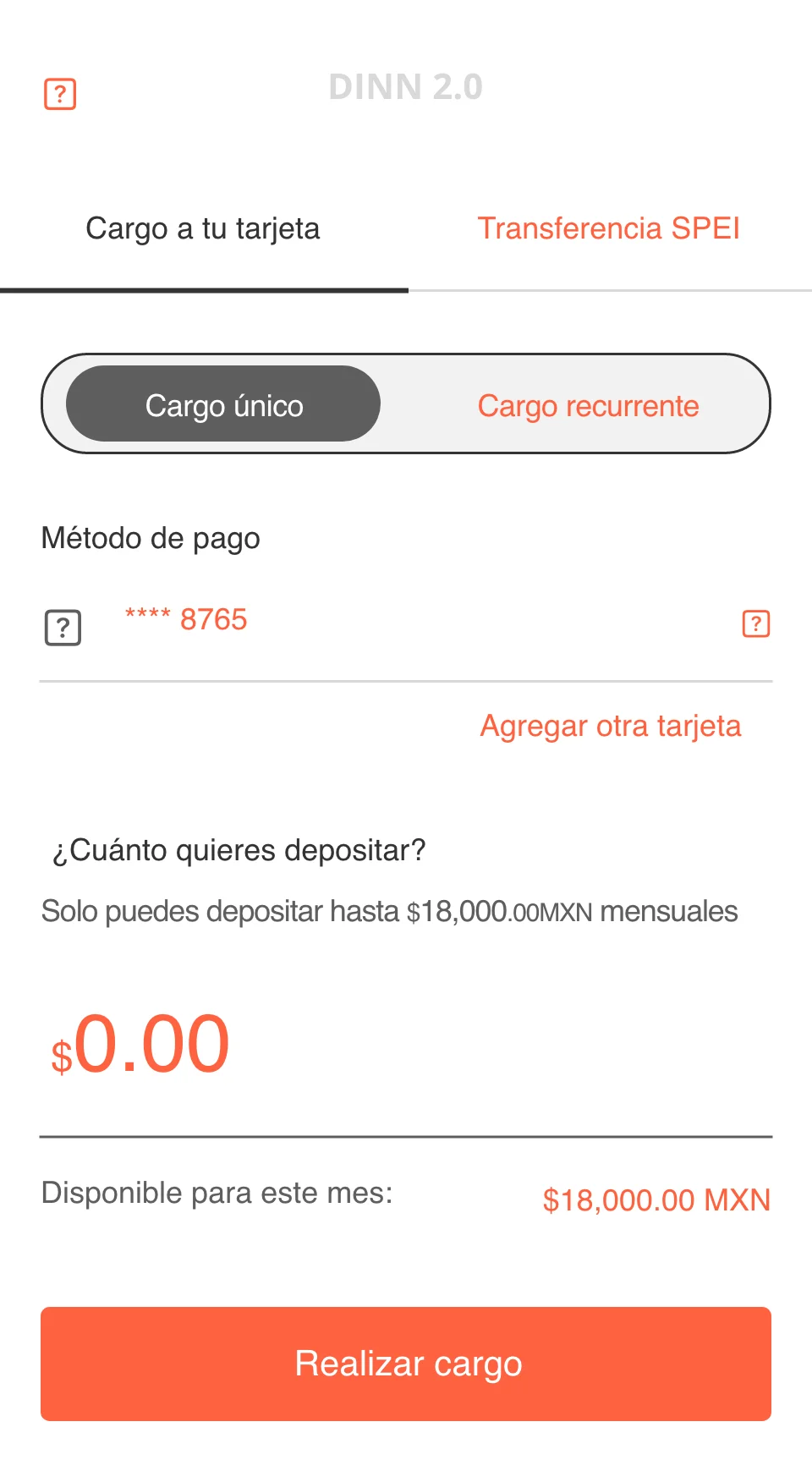
Used BJ Fogg's Behavior Model: Motivation (show they're already close to investing) + Ability (100% digital, no minimum, 3 actions max) + Trigger (campaigns tied to specific moments).

Three non-negotiable product attributes from research:


No minimum investment, no fees, intuitive enough to use without instructions.

Outcome

Breakeven exceeded by +5%. 220K users. +127% revenue YoY

Breakeven exceeded by +5%. 220K users. +127% revenue YoY

The pilot ran Oct–Dec 2019 no paid marketing. The financial model projected breakeven by September 2022. DINN exceeded that target ahead of schedule.

220K+

Users in 4 years from 205 at launch

Reflection

The most important work happened before any design tool was opened

The most important work happened before any design tool was opened

Every decision that came after (the brand, the product, the acquisition strategy, the board pitch) traced back to what we learned in those 35 interviews and 500+ surveys.

DINN 1.0 failed not because the product was poorly built, but because it was built on assumptions that hadn't been tested.

Behavioral design is product design.

Wrong hypotheses are expensive. Research isn't.

Overview

205 users after two years. The instinct was to pivot. Instead, we did the research

DINN 1.0 launched in 2017 and had 205 users by early 2019. The business context: Actinver's average client was 54 years old. More than half of AUM held by clients over 60. The millennial segment was a real and unaddressed opportunity. DINN was Actinver's answer.

As part of the founding team, I was involved from research through brand definition, product conceptualization, and launch designing the brand, the identity system, and the first versions of the product.

Research

Every request ended up in one person's email. The system was the person

The assumption: young people don't invest because they don't have money, prefer to spend it, or think it's too complicated. That hypothesis was wrong.

72% of young Mexicans 18–35 already save. Of those, 68% keep money in a bank account. Only 32% invest. And 70% said they don't know enough about investing to start. The barrier wasn't money or interest. It was an understanding problem.

Competitive benchmark of 24 fintechs (14 global, 10 Mexican): almost every competitor communicated in functional territory rates, features, security badges. Nobody had claimed the emotional space.

Core Decisions

Don't build for investors. Build for savers who don't know they can invest

Own the emotional territory no competitor was claiming


Brand House built around: Purpose Create the habit of investing. Territory Simplicity. Personality Mentor.


Tagline: "Que tu dinero crezca contigo."

Design the behavioral change, not just the product


Used BJ Fogg's Behavior Model: Motivation (show they're already close to investing) + Ability (100% digital, no minimum, 3 actions max) + Trigger (campaigns tied to specific moments).

Three non-negotiable product attributes from research:


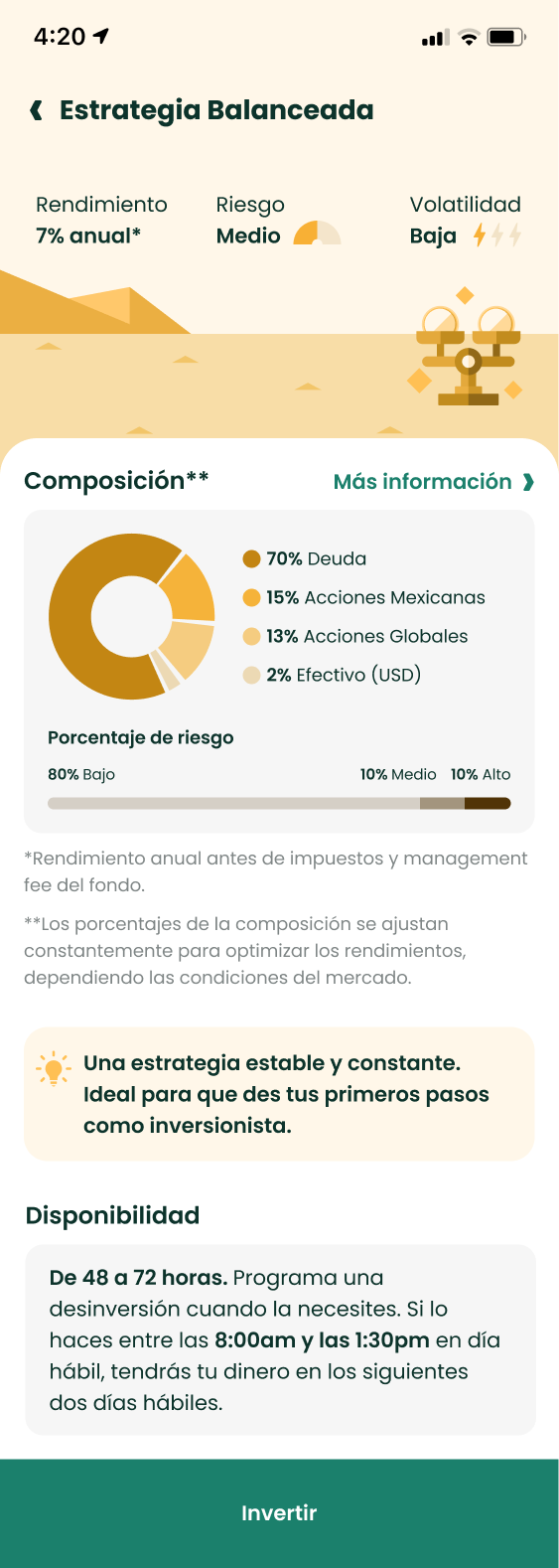
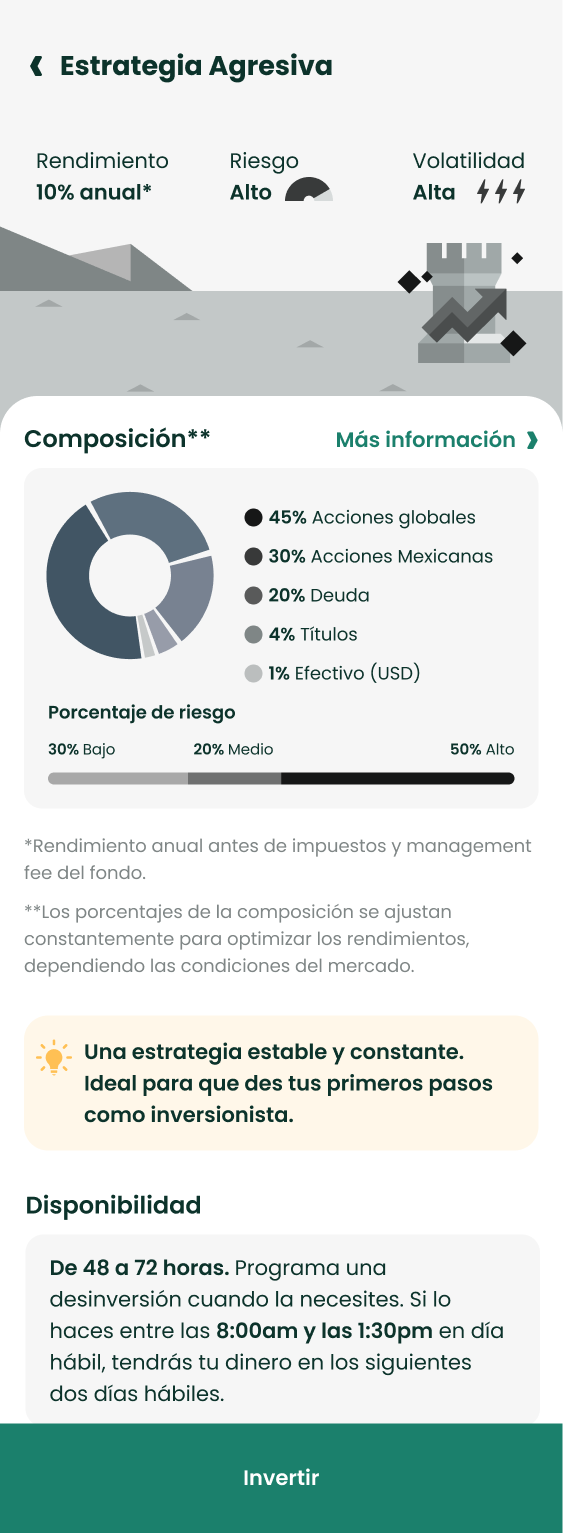
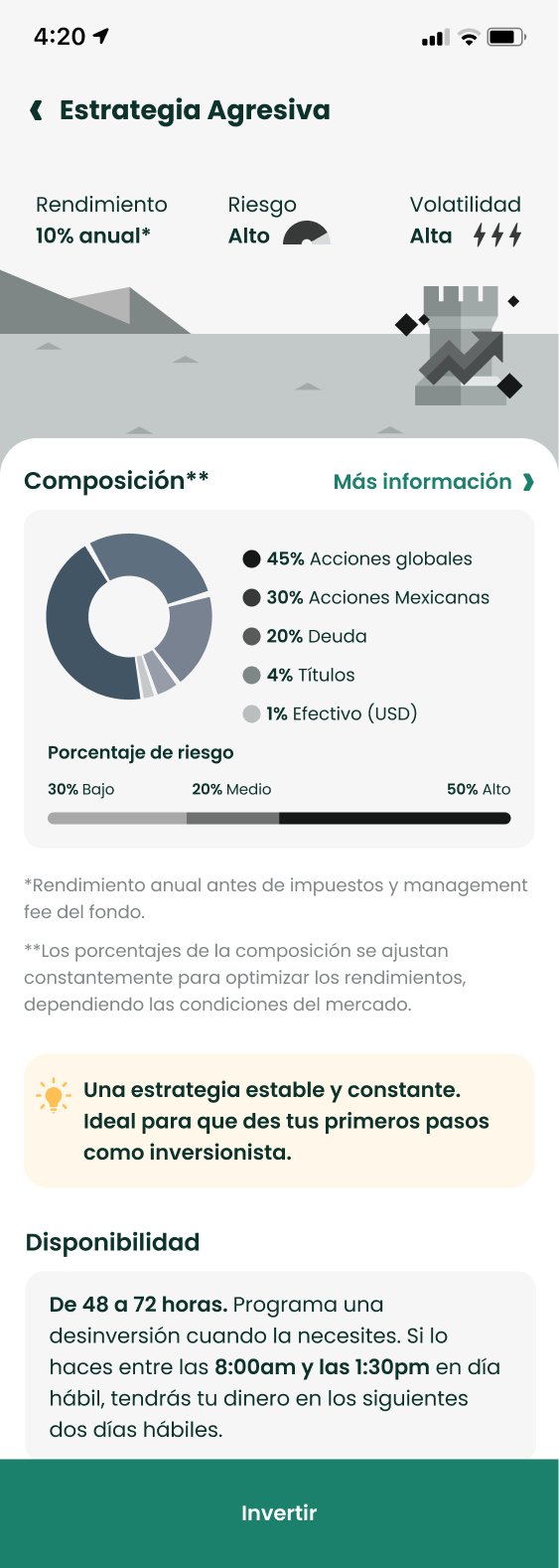
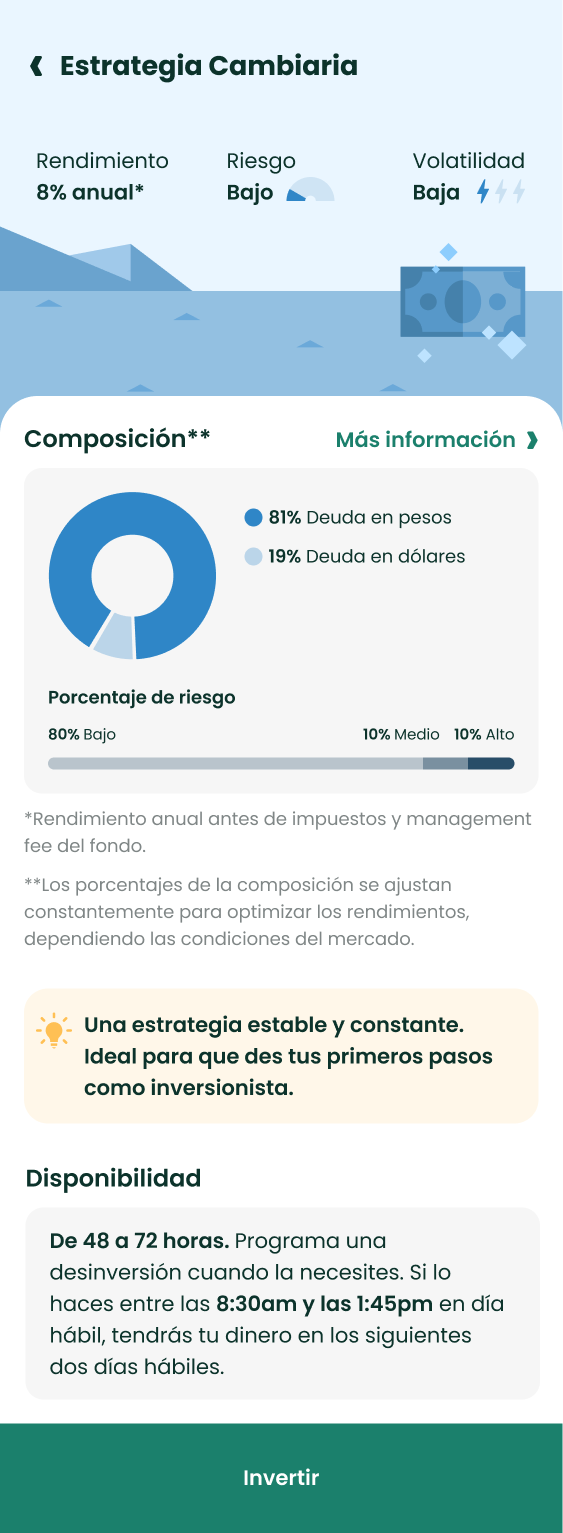
No minimum investment, no fees, intuitive enough to use without instructions.

Outcome

Breakeven exceeded by +5%. 220K users. +127% revenue YoY

The pilot ran Oct–Dec 2019 no paid marketing. The financial model projected breakeven by September 2022. DINN exceeded that target ahead of schedule.

220K+

Users in 4 years from 205 at launch

Reflection

The most important work happened before any design tool was opened

Every decision that came after (the brand, the product, the acquisition strategy, the board pitch) traced back to what we learned in those 35 interviews and 500+ surveys.

DINN 1.0 failed not because the product was poorly built, but because it was built on assumptions that hadn't been tested.

Behavioral design is product design.

Wrong hypotheses are expensive. Research isn't.

Impact

220K+

Users in 4 years from 205 at launch to institutional scale

+5%

Breakeven exceeded ahead of schedule vs. board-approved financial model

+60%

AUM growth YoY from proof-of-concept to institutional scale

+127%

Revenue growth H1 2022 H1 2023 the product economics started working

+164%

LTV grew YoY users stayed, funded more, and compounded value over time