Luis Octavio
CV ↓
AI-First Creative Production Workflow

Banking & Investments · Actinver · 2024 – 2026

AI-First Creative Production Workflow

The team was working hard. The problem was that everything still ended up in one person's inbox. I built the system that changed that.

+60%Production capacity increasewithout adding headcount
~1 week fasterAvg. delivery reduction
Dropped to zeroBrand and copy errorspreviously 1–3 spelling or tone errors per month reached final delivery
01

Impact

+60%
Production capacity
Without adding a single headcount
~1 week faster
Avg. delivery reduction
Eliminated through structured intake and auto-prioritization
→ 0
Brand & copy errors
Previously 1–3 spelling or tone errors per month reached final delivery

We went from managing creative requests by email to running a system that other Actinver teams independently decided to copy.

Before
After
Rendering…
02

Context

Nobody asked for this. I mapped the full creative process, identified where everything was breaking down, designed the system to fix it, built it in Airtable, trained the team, and presented it to executives as a performance visibility tool. That last part changed how Marketing was perceived internally.

Company: Actinver — national investment bank with multiple business units generating continuous demand for audiovisual content: social media, CRM, DOOH, video, events, paid campaigns.

Team: 4 designers, 1 design lead, 2 content coordinators, 2 community managers, ~25 active requesters from Marketing and Growth. Eventually adopted across other teams.

03

The Problem

When I mapped out the full creative process, the problem was clear: every single request ended up in one person's email.

The deeper issue was organizational. Marketing's output was invisible to executives because there was no system to make it visible. The team was doing a lot of work and nobody could see it.

No Structure
Everything arrived through one inbox
Urgent and non-urgent requests competed invisibly
Incomplete briefs arrived constantly — 1–3 days lost to back-and-forth
Manual triage by Design Lead every single morning
No Visibility
Nobody could see the work or measure it
No backlog — other teams couldn't track their requests
Marketing's output was invisible to executives
No metrics, no throughput data, no capacity signal
No Capacity
The team was always reactive
No quality checkpoint — errors reached final delivery
After-hours work became routine, not exception
Volume grew but the system never scaled with it
Rendering…
04

The Solution

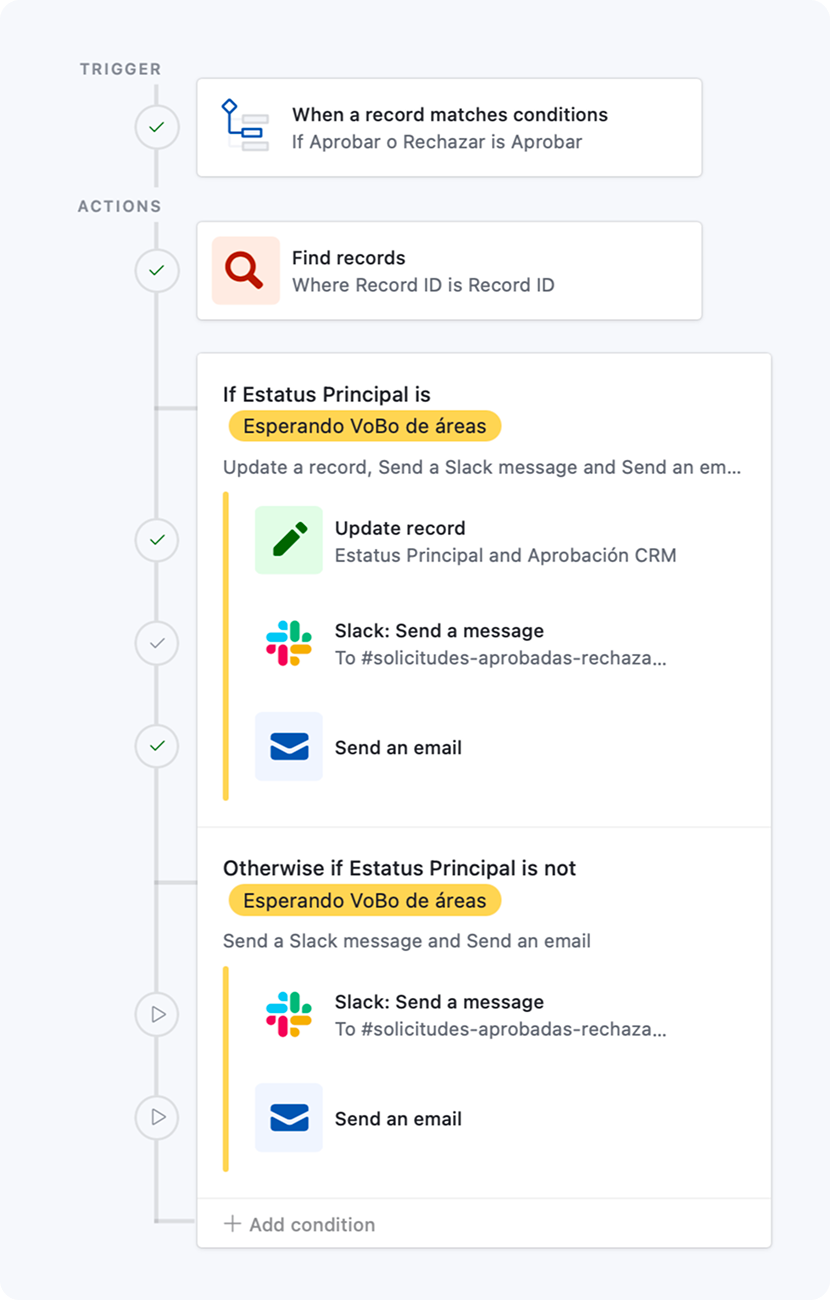
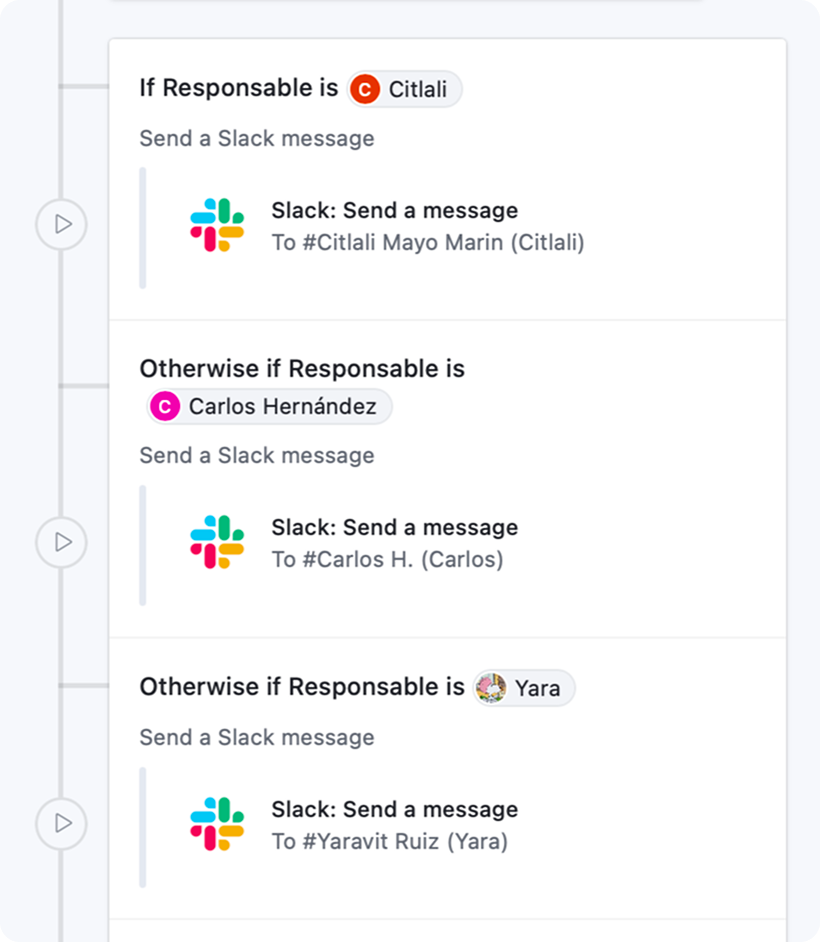
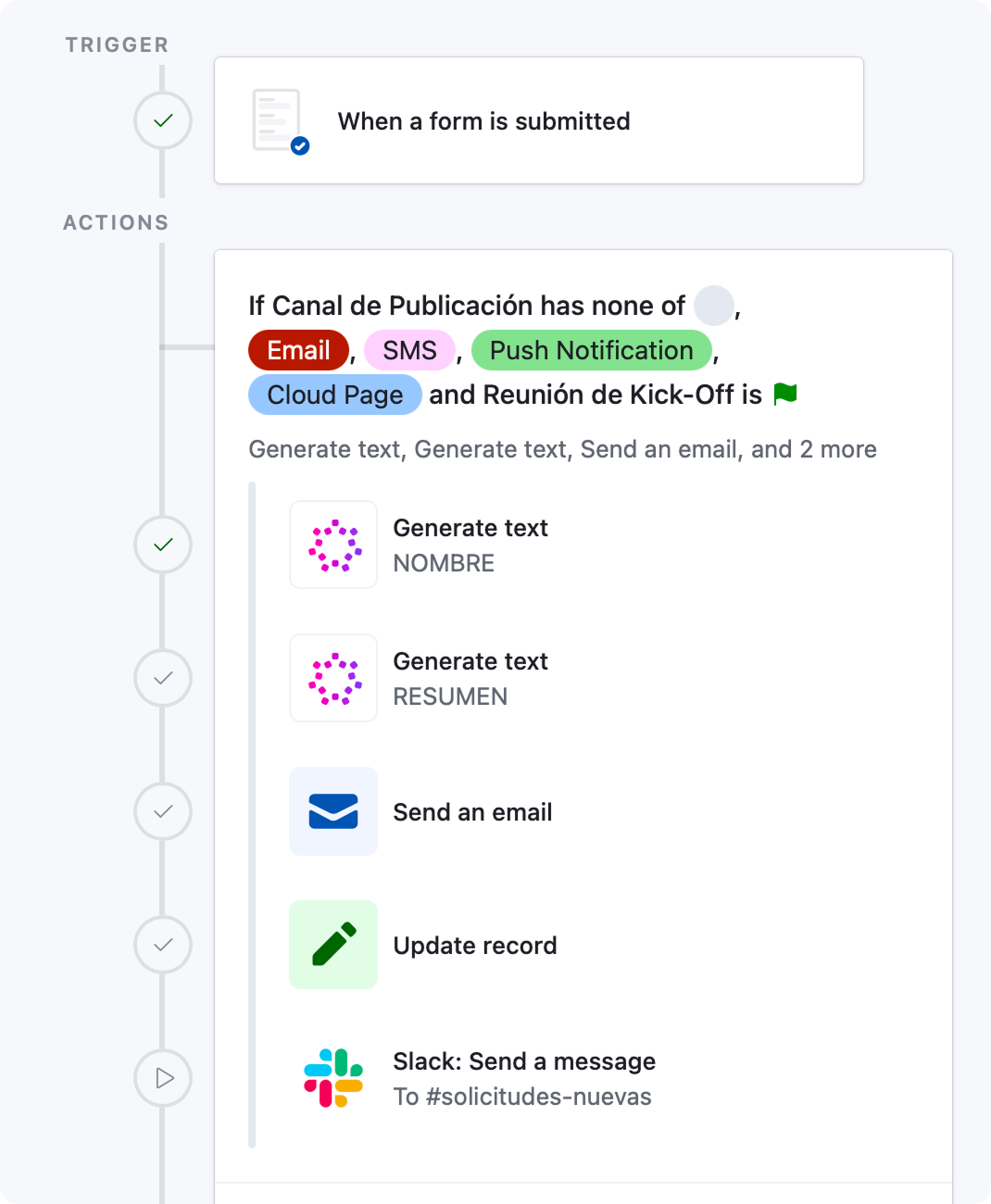
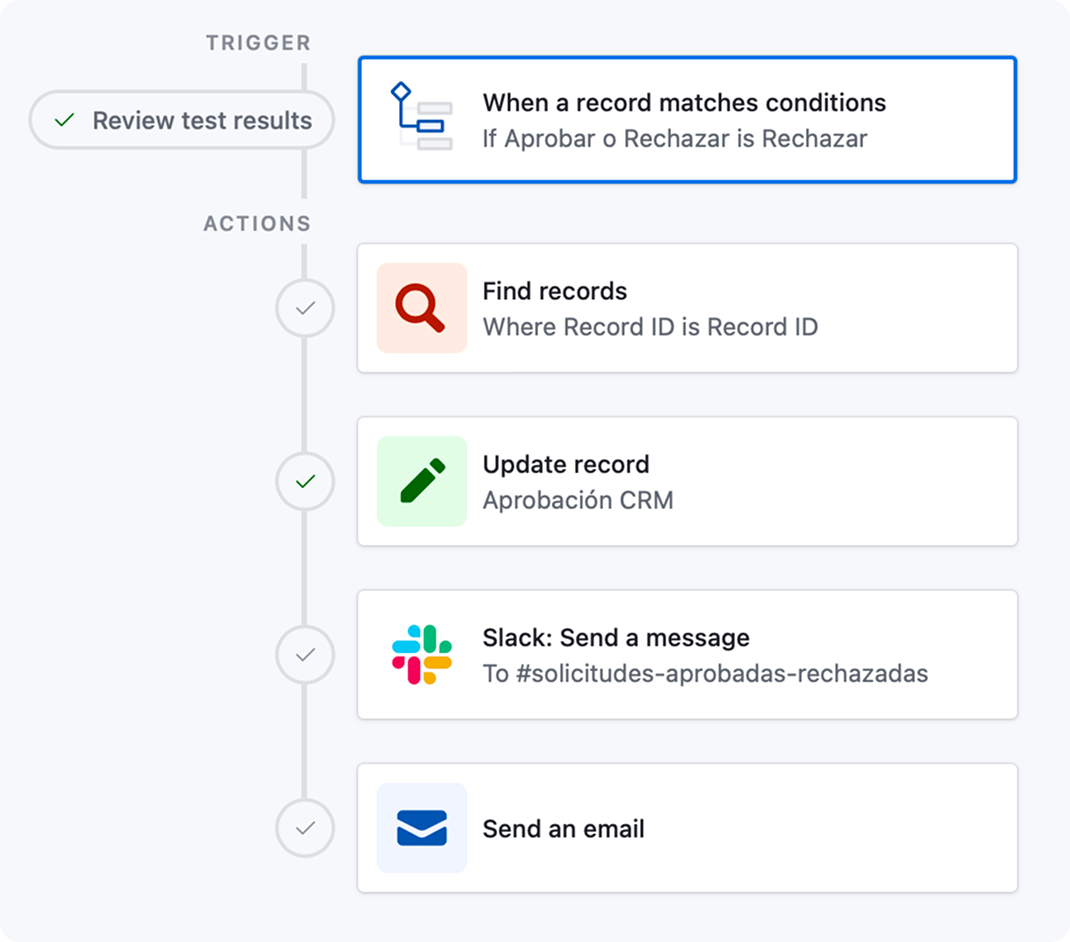
I built a creative operations system with Airtable as the main platform, supported by Slack and Institutional Mailing. The entire process — from intake to delivery — is now structured, automated, and visible.

Production process
01
Intake & Request
AirtableSlack

The requesting team fills out a structured form with objective, audience, channels, and deadline. Marketing receives an automatic alert. If the piece involves client communication, it goes through CRM approval before production begins.

Structured briefAuto-confirmationKickoff if neededUrgency flag
02
Brief & Kickoff
TeamsMeeting

For complex projects, an alignment meeting is scheduled with all involved parties — covering key messages, legal requirements, reference materials, and committed delivery dates.

Clear objectivesDefined audienceConfirmed channelsLegal inputs
03
Content & Design
CopyDesignAI

Content writes the narrative and sends it for sign-off. Once the copy is approved, Design begins. AI assists with visual variations, tone review, and iteration speed across formats.

Copy → Sign-offRevisions if neededCopy done → Design startsAssets uploaded
03.1
AI Generative Platform2026 Update*
Claude CodeNanoBananaStandalone

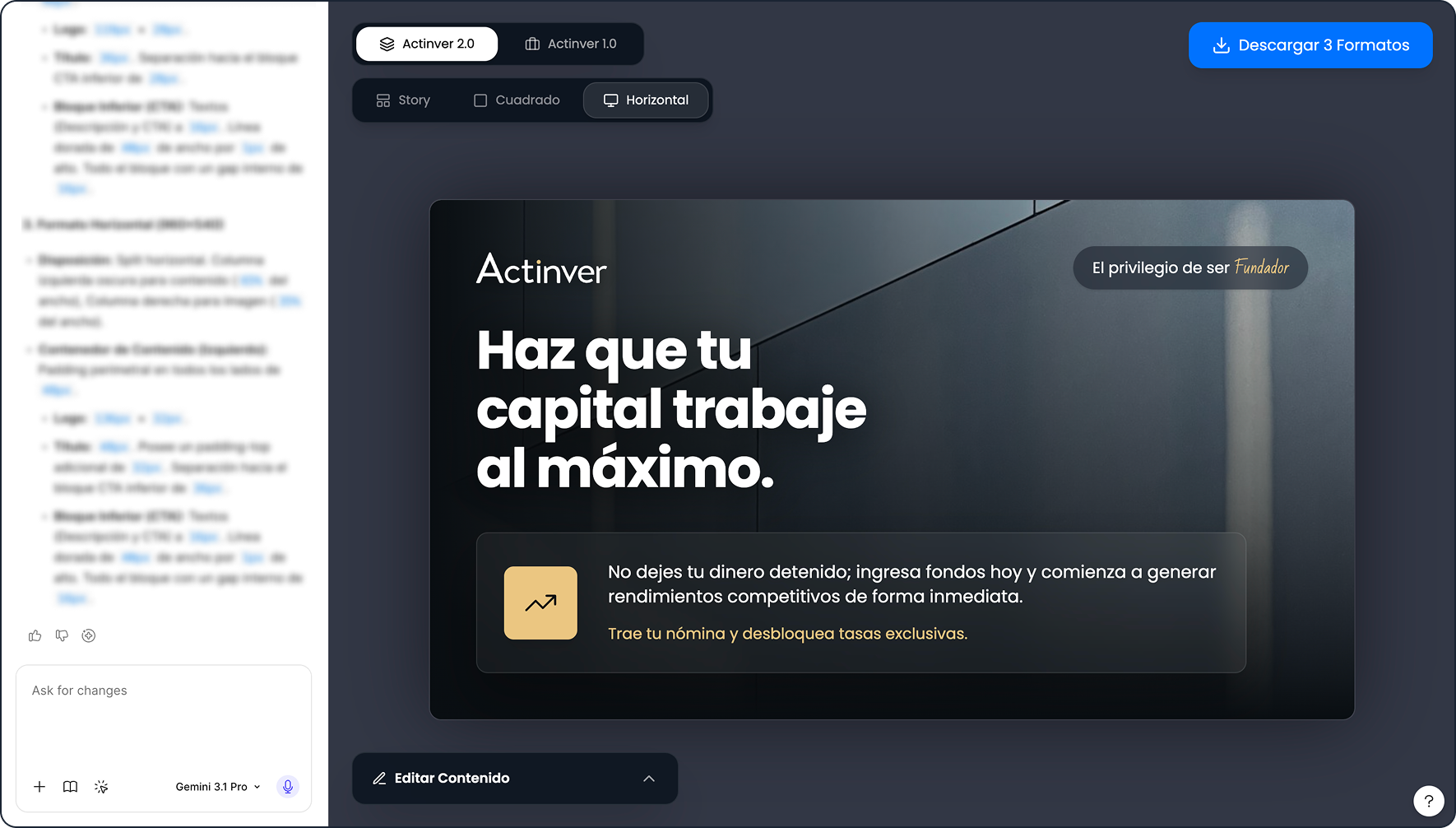
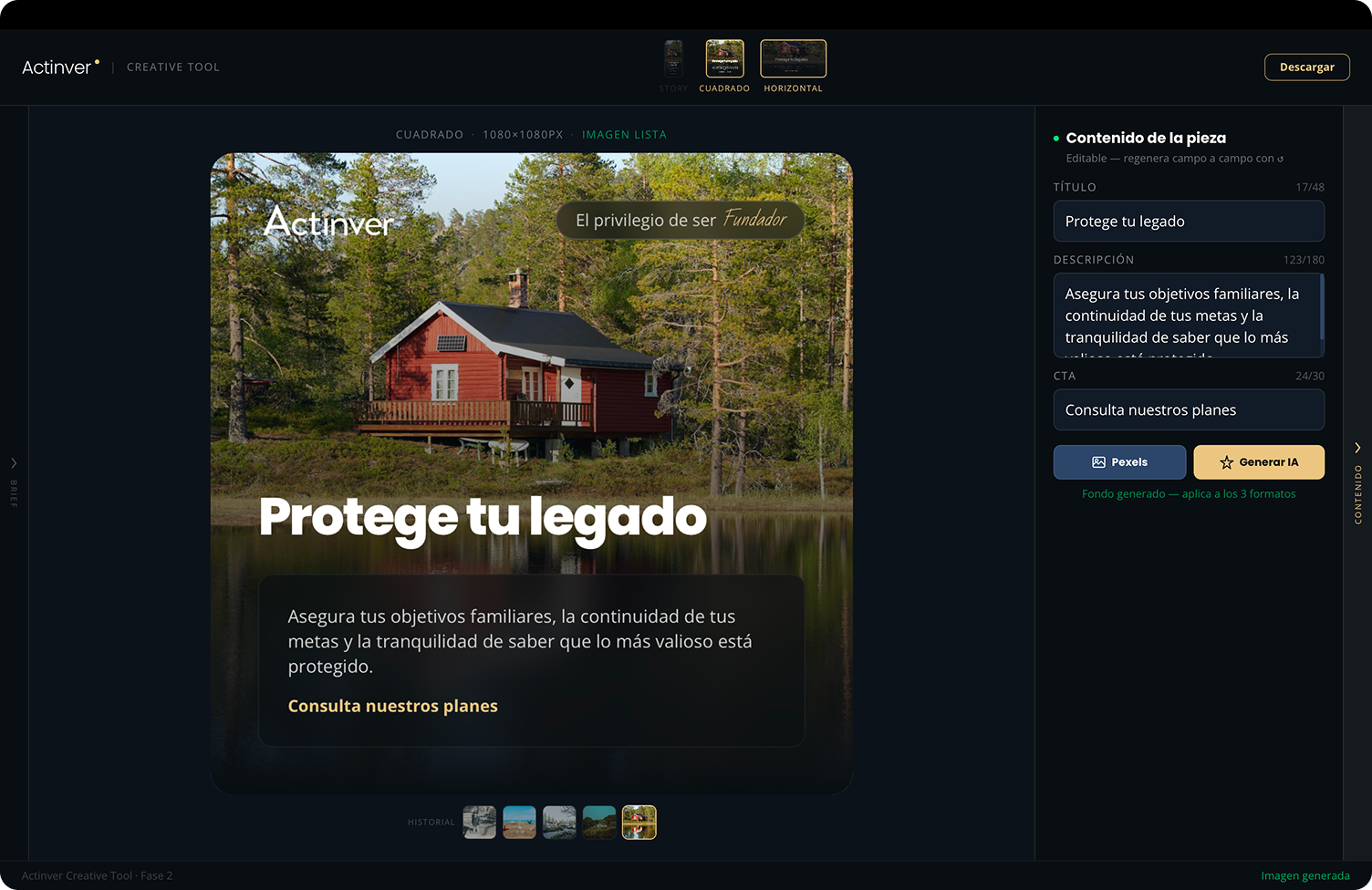
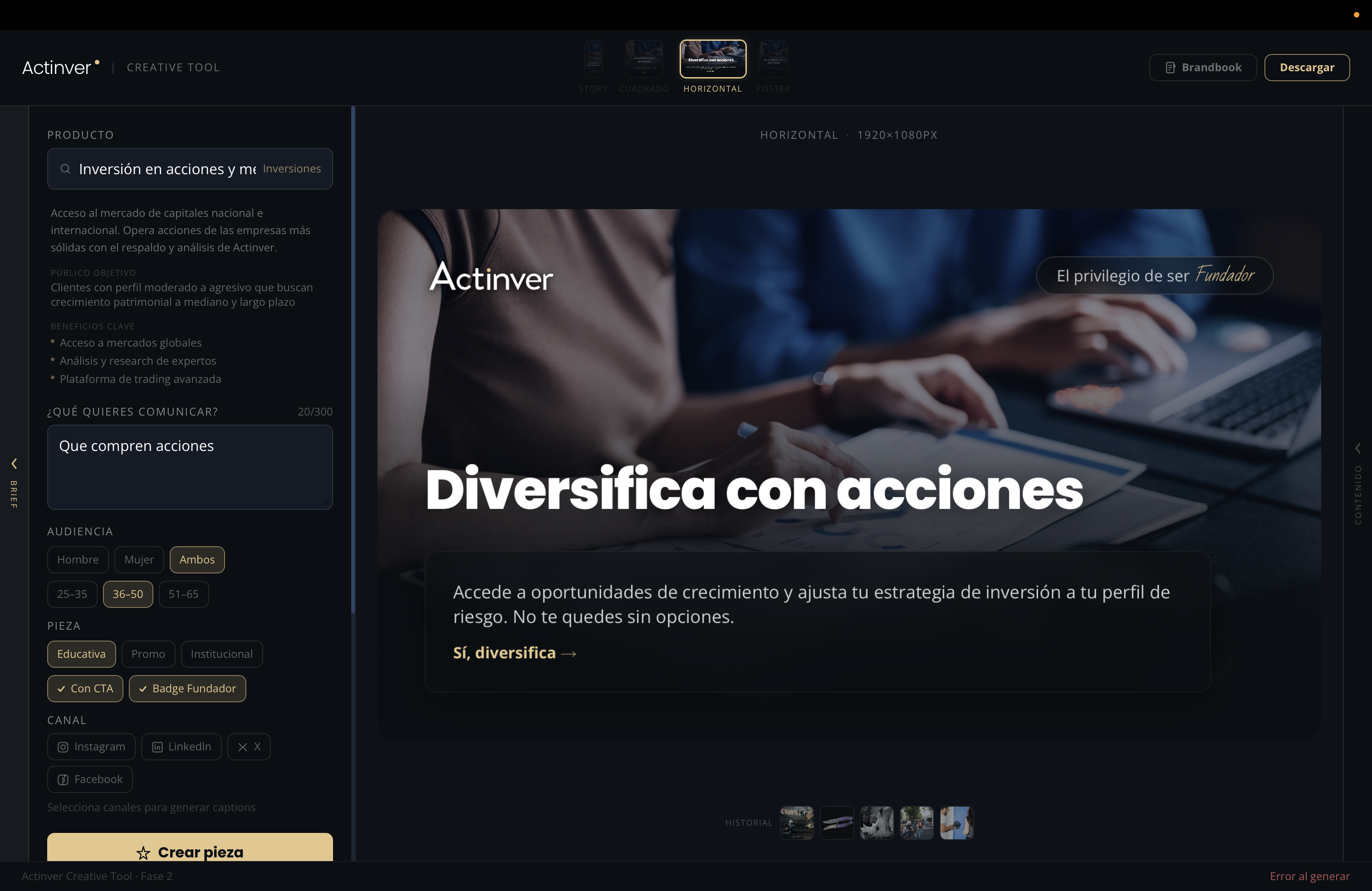
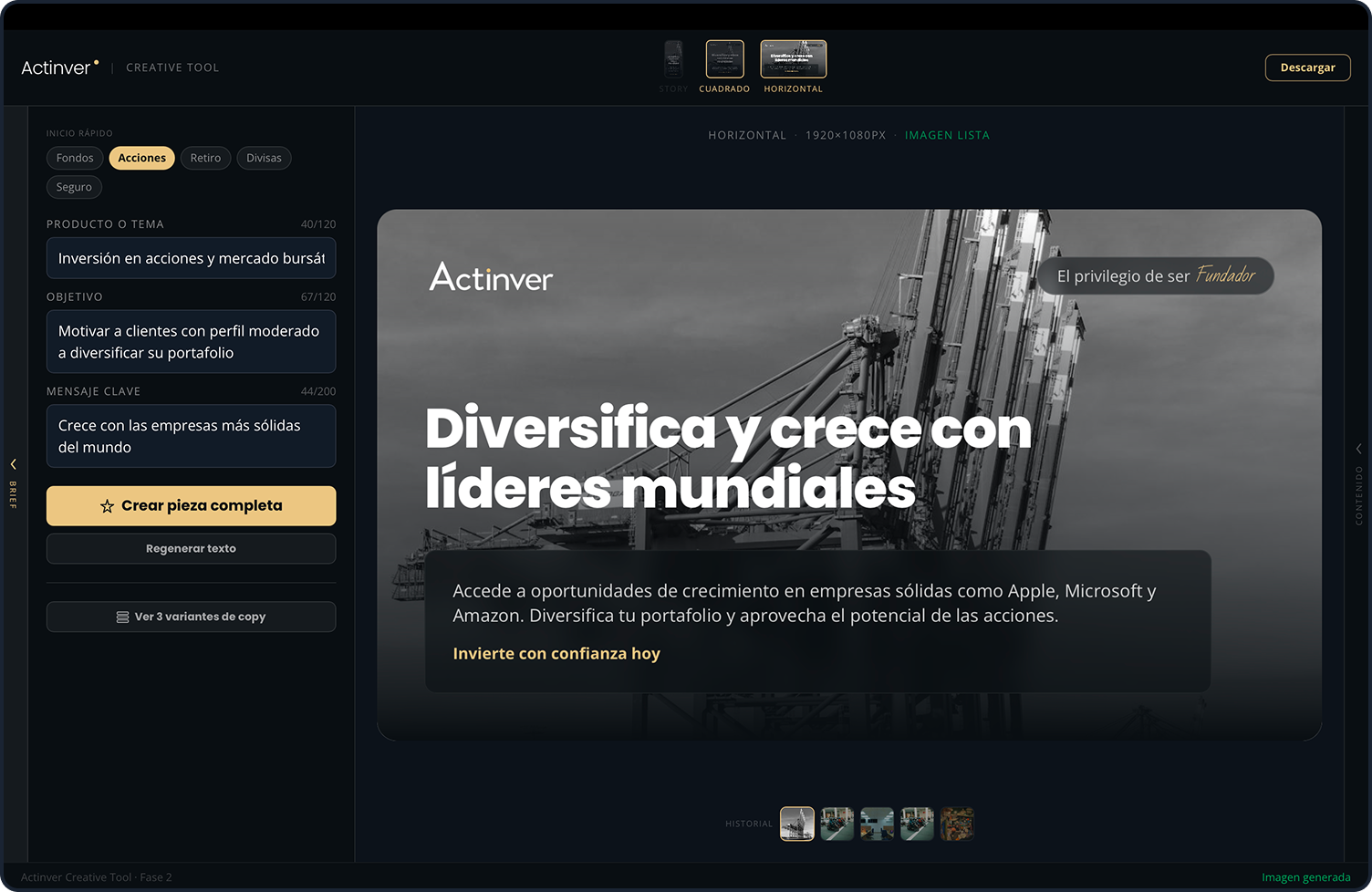
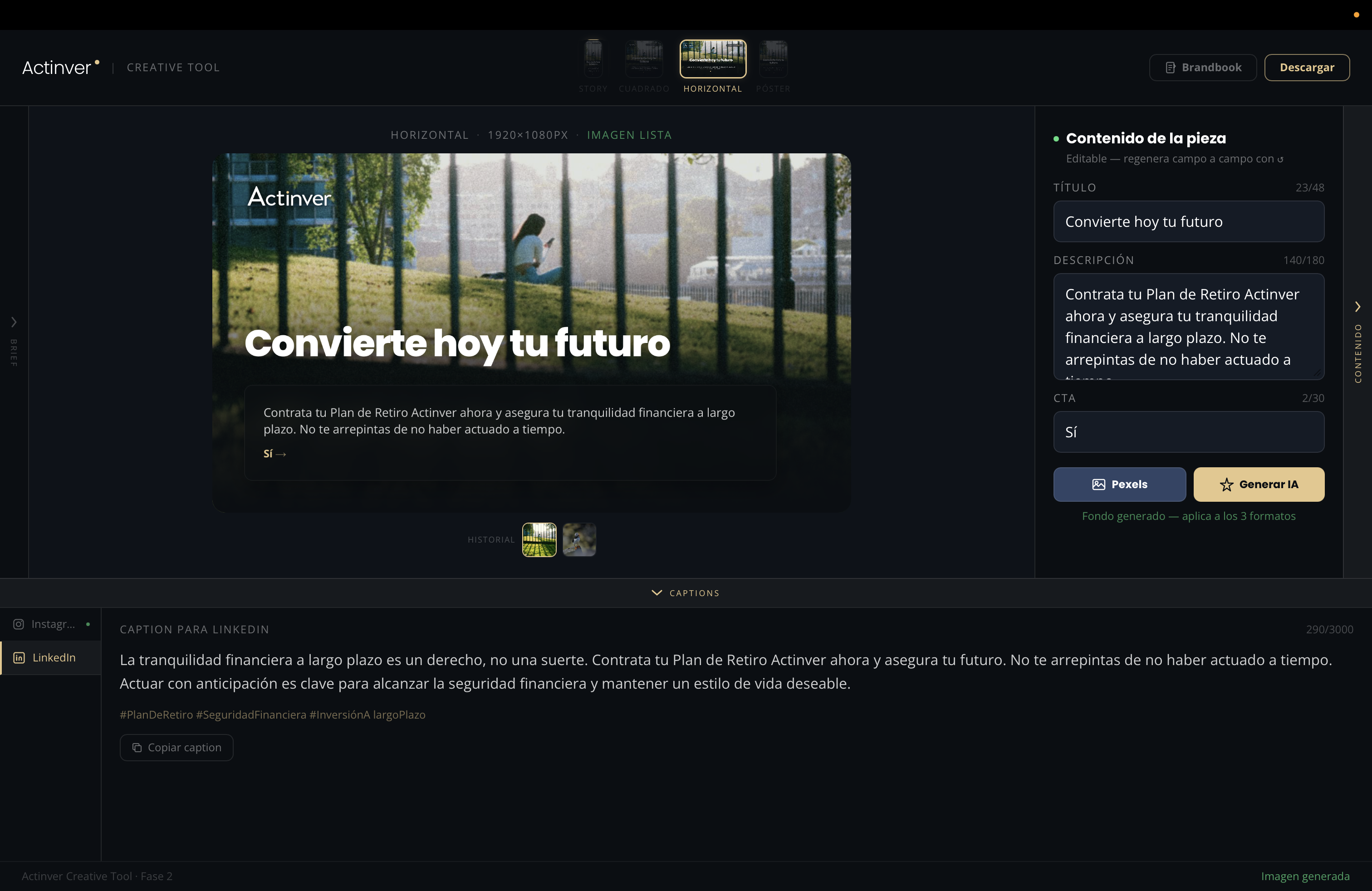
Once a request is approved, the platform picks it up automatically. It reads the brief, pulls from NanoBanana Pro and free stock, generates the piece grounded in the Actinver brandbook, adapts it for every social media format, and delivers it back to Airtable — reviewed for visual quality and copy accuracy. Some pieces that used to take a full day now take less than a minute.

Airtable triggerBrandbook-groundedAuto-adapt formatsVisual + copy QA
04
QA & Validation
AI ReviewGO / NO-GO

Internal review: the responsible person and Content, Design, and Social leads validate each piece. An AI-assisted checklist runs before final approval. Only a GO clears the piece for delivery.

Strategic alignmentBrand toneArt & identityCTA + accessibility
05
Delivery & Archive
Email48 hrs

The requester receives a link to their materials. They have 48 hours for minor feedback or final approval. Once the window closes, the request is automatically archived with no further changes.

Delivery link48h feedback windowAuto-archivedNo changes after close
* Step 03.1 was added in 2026 as a standalone AI generative platform, built entirely with Claude Code. Details in "The Platform" section below.
SAI-SOL-auto-1
SAI-SOL-auto-3
SAI-SOL-auto-2
SAI-SOL-auto-4
05

Execution

I built the entire Airtable architecture and automation logic myself. Then I ran two tracks simultaneously:

Internal — Onboarding sessions for Marketing and Growth teams, documentation shared across the whole company, feedback collection, and two major iterations based on how people were actually using it. v1 was intake and assignment. v2 added the AI validation layer and the executive dashboard after seeing that the biggest gap wasn't speed — it was visibility.

Organizational — I presented the system to executives as a performance visibility tool. That shifted how Marketing was seen — from a reactive service that was hard to measure, to a structured operation with clear metrics.

The system wasn't something we launched once and moved on from. We treated it like a product: versioned, iterated, and improved based on real feedback.

Rendering…
06

Key Deliverables

Centralized intake form
Single entry point
Eliminated incomplete briefs and all email requests — no form, no request.
Automated assignment workflow
Stage-based tracking · Ownership · Deadlines
Removed manual delegation. Every request routed by type and complexity.
AI validation layer
Automated QA before delivery
Brand and copy errors dropped to zero — previously 1–3 spelling or tone errors per month reached final delivery.
Executive visibility dashboard
Real-time backlog · Production metrics
For the first time, Marketing's output was legible to leadership.
Documentation & training program
Company-wide adoption · v1 → v2 iterations
Ensured the system lived beyond its creator — and other teams could replicate it.
07

Outcome

In the first two months, production capacity went up 60%. Delivery times dropped by 2–4 days. After-hours work caused by reactive overload basically disappeared.

The clearest signal that it worked: Operations and Digital Lab independently decided to replicate the system for their own teams. No training, no coordination from my side. They just saw what Marketing was doing and built their own version. That's the best validation a system can get.

Beyond capacity and speed, the system gave the team something it never had before: data. That visibility gave us the numbers to demonstrate Marketing's impact to leadership with hard evidence instead of perception.

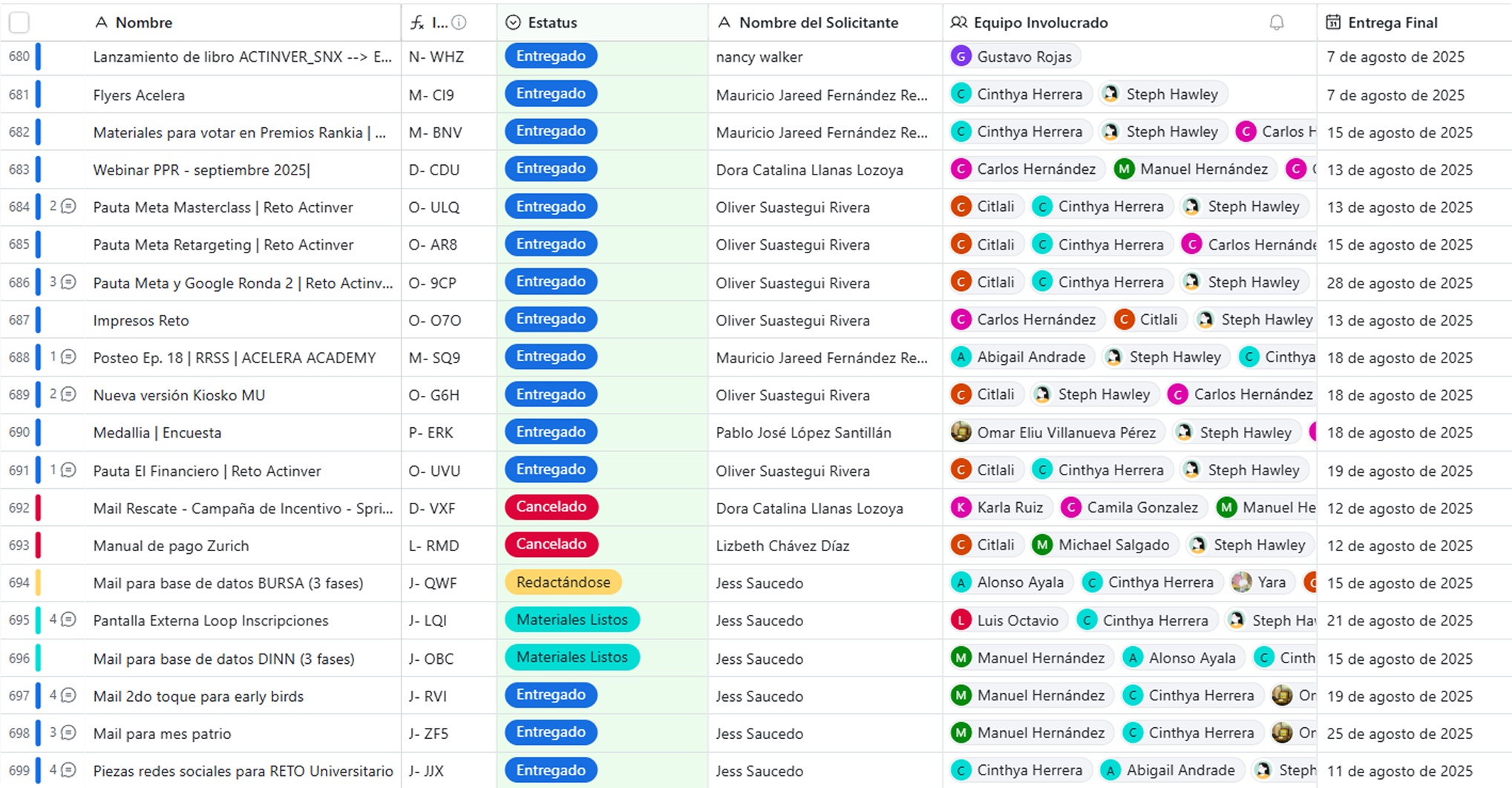
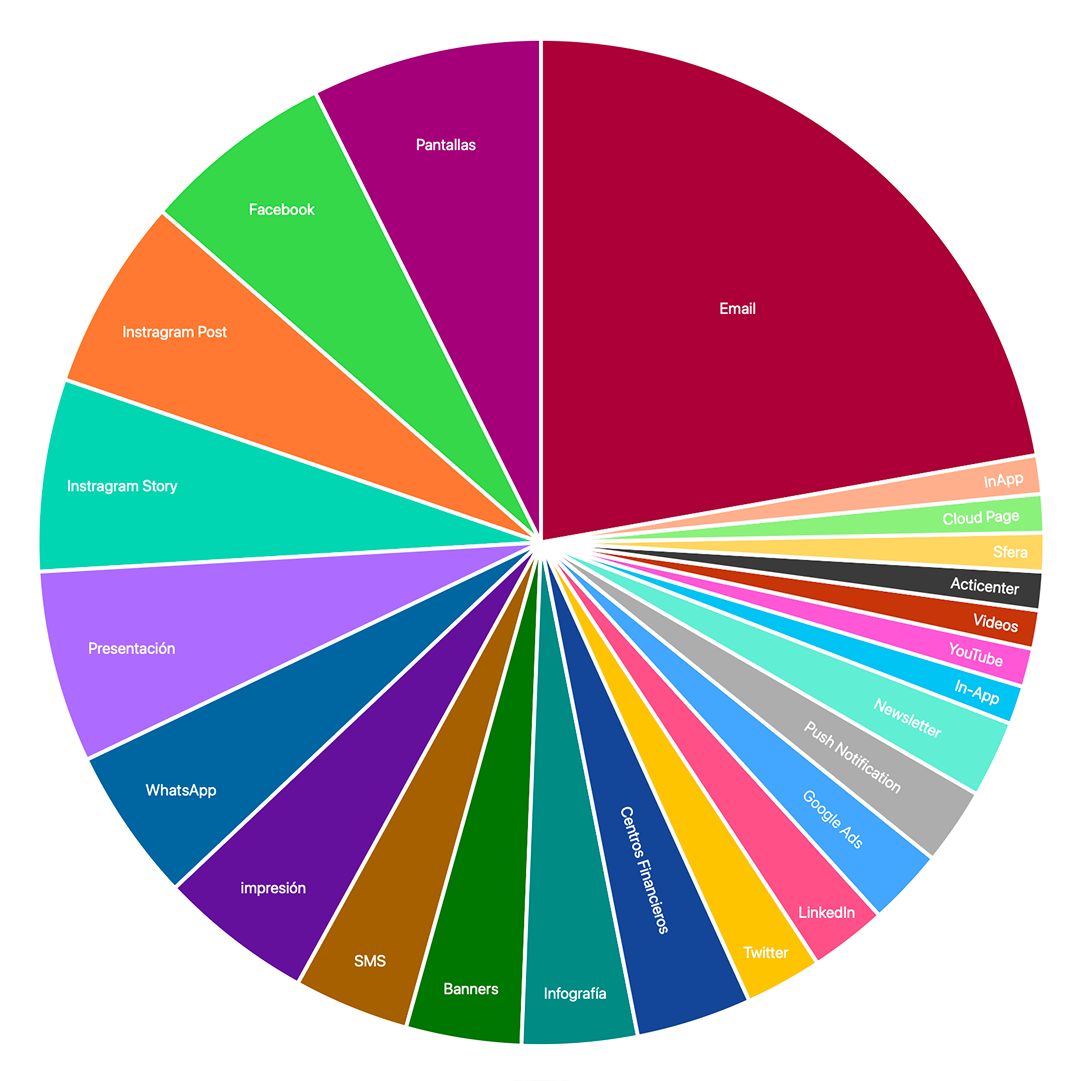
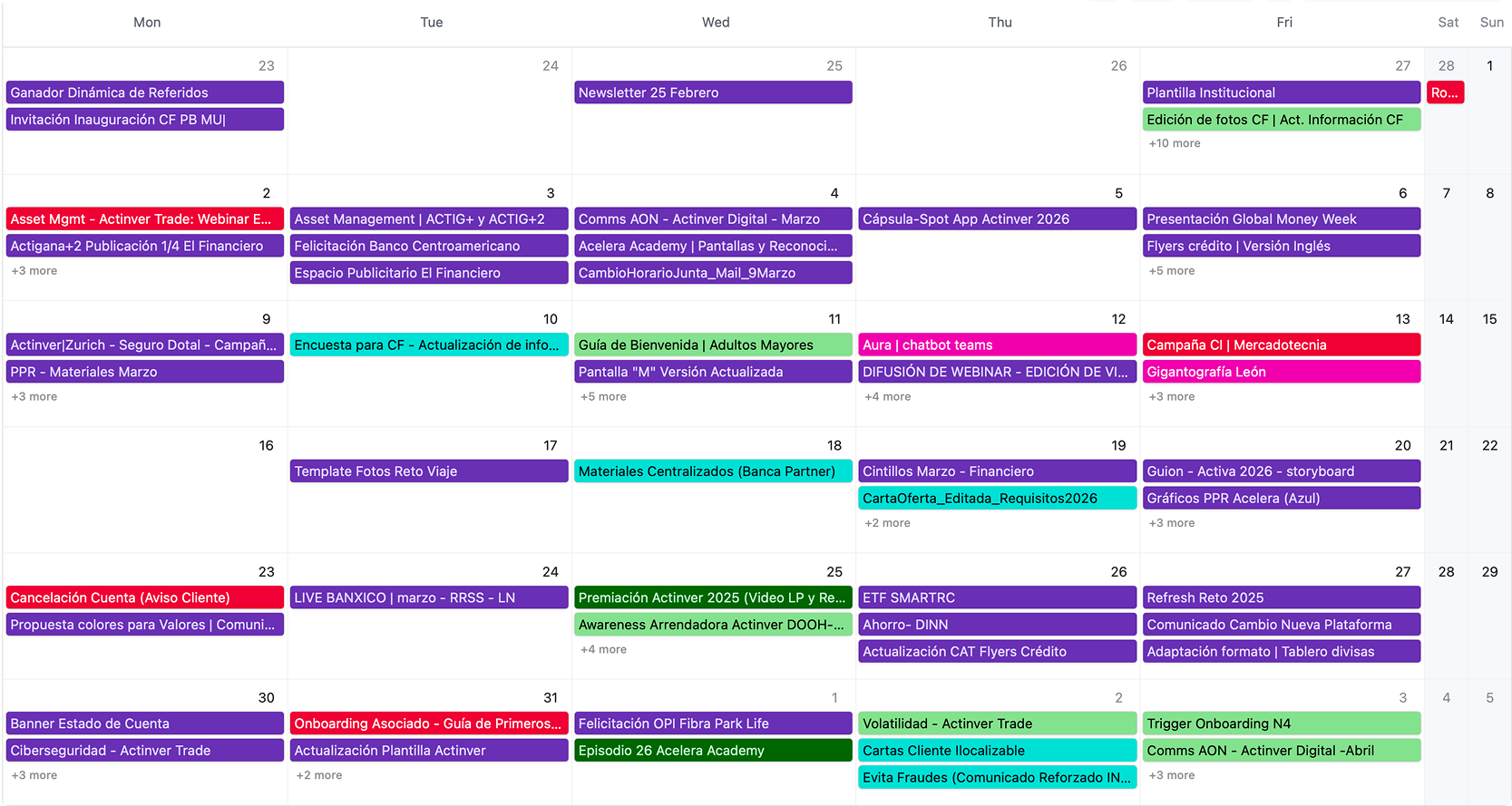
What the system made visible
What was being produced
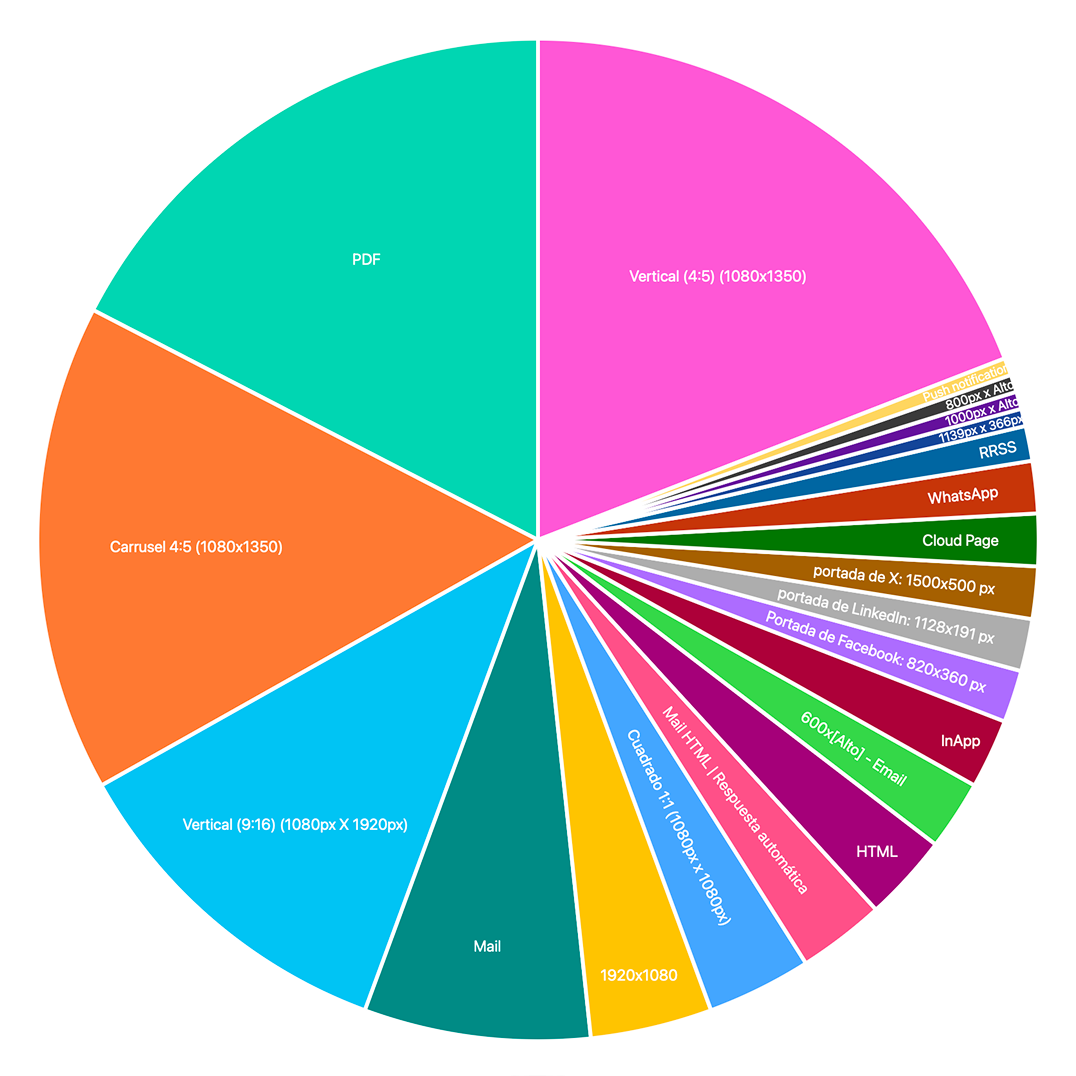
Full inventory of assets by type, volume, and requester
For which channels
Social, CRM, DOOH, video, events — all tracked per request
In which formats
Format-level breakdown enabling smarter resource planning
At what volume
Hard numbers to justify headcount, tools, and budget decisions
SAI-OUT-list
SAI-OUT-channels
SAI-OUT-calendar
SAI-OUT-formats
08

The Platform

The ops system solved the process problem. But there was still a bottleneck: the actual production of each asset still required a designer to start from scratch every time. So I built the next layer — a standalone AI-powered creative platform, migrated to Claude Code.

The first version was prototyped in Figma Make to validate the concept and interface quickly. Once the logic was proven, I migrated it to Claude Code — turning it from a prototype into a real production system.

Once Airtable registers a new approved request, the platform picks it up automatically. It reads the brief, pulls from NanoBanana Pro and free stock, generates the piece grounded in the Actinver brandbook, adapts it for every social media format, and delivers it back to Airtable — reviewed for visual quality and copy accuracy.

Before
1 day
Average time to produce a standard content piece
After — Platform
< 1 min
Triggered, generated, reviewed, and delivered automatically
SAI-PLAT-V1--full
SAI-PLAT-01
SAI-PLAT-V2-01
SAI-PLAT-02
SAI-PLAT-V2-02
Standalone
Any team member can use it independently
The goal wasn't to create a tool only I could operate. It was to build something the whole team could own — without needing a designer in the loop.
Built with AI
Entirely built with Claude Code
A solo build. No engineering team, no agency. One person, one AI tool, one production system in less than two months.
Executive backing
Endorsed by Actinver's main executives
Recognized as a concrete example of how AI can be implemented as a primary tool — not a novelty, not a test, but a daily production system.

Since launching in early 2026, the platform has been continuously improved — a daily production system with measurable output that keeps getting better.

09

Reflection

You don't always need more people. You need a better system. The team had the capacity — it just wasn't visible or organized. Building the right process unlocked more output than adding headcount would have.

AI should make human work better and faster. Every asset was designed by a human. AI's job in this system was to catch what humans miss at scale — errors, tone drift, misalignment with the brief — before anything reached the client. That's a meaningful use of the technology. Not replacing judgment; extending it.

Making work visible changes how it's valued. Showing executives what the backlog actually looked like changed how Marketing was perceived internally. The work didn't change — the ability to see and measure it did. That's a design problem, and it has a design solution.