Product Design
Rebrand
Into a
Product System
Role
Head of Design
Year
H2 2022
Sector
Fintech
Overview
DINN had a new brand identity. The app still looked like the old one
DINN had a new brand identity. The app still looked like the old one
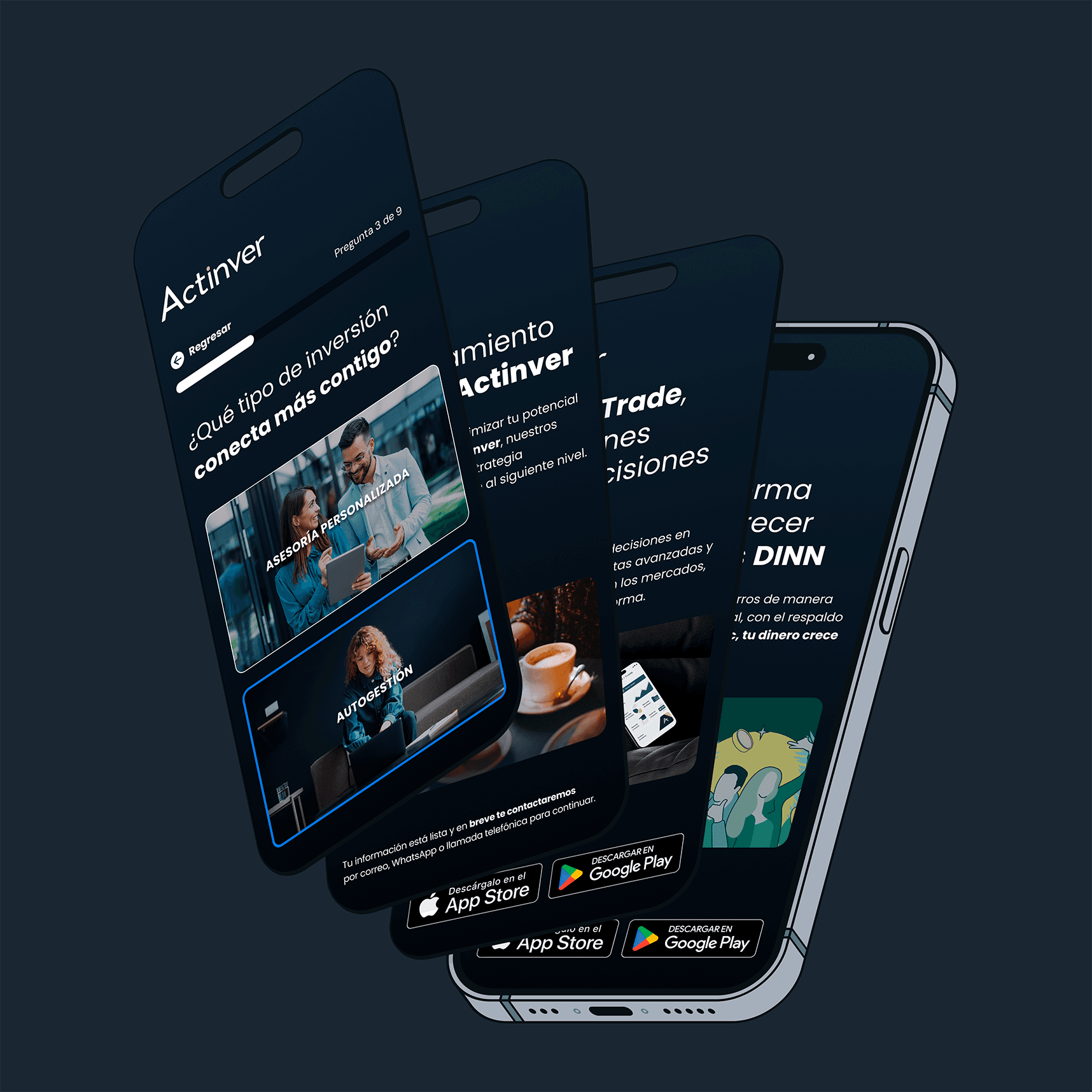
After two brand audits, DINN had a new visual identity — but inside the app, nothing had changed. Different designers, different moments, different interpretations had created an inconsistent product. In a financial app, that's not just a visual problem. It feels unsafe.
I rebuilt the visual system from scratch and tested it with 50+ users before shipping a single screen.
Problem
Maturity without rigidity. Clear without overwhelming
Maturity without rigidity. Clear without overwhelming
The app was too playful. Bright colors, decorative illustrations, low visual hierarchy. For a product asking users to trust it with their savings, that disconnect was a real liability.
But the answer wasn't "make it more serious." DINN's positioning was about being approachable — making investing feel accessible. A qualitative study (20 in-depth interviews) confirmed the tension: approachability was working, but it was creating a ceiling on how seriously people took the product.
The challenge: The new visual system had to be: accessible enough for first-timers, mature enough to grow with them.
What I Built
A system that would work for any designer, any screen, any future
A system that would work for any designer, any screen, any future
Color governance
Not just which colors to use, but how much of each and when. That one change alone fixed most of the visual noise.
Typography hierarchy
Clearer type scale, tighter rules for headings, body, and supporting text. Every screen needed to communicate priority clearly.
Illustration direction
Calmer, more grounded compositions. Less decoration that adds visual weight without meaning.
Tone by context
Rules for how the visual tone shifts across different moments: onboarding, portfolio view, alerts, educational content.
Validation
Tested with 50 users before shipping a single screen
Tested with 50 users before shipping a single screen
Comparative testing with 25 existing DINN clients and 25 new users — measuring perception of security, calmness, simplicity, and trust between the old and new visual systems.
Every key trust metric moved in the right direction. The changes weren't subtle — users felt the difference immediately and consistently across both groups.
100%
Perceived increased security
90%
Associated with calmness & stability — perception shifted: playful → trustworthy
85%
Perceived improved simplicity — cognitive load reduced across both user groups
80%
Felt increased trust & transparency — the most critical metric in a financial product
Reflection
In fintech, how things look directly affects how safe people feel
In fintech, how things look directly affects how safe people feel
Users don't process trust rationally — they feel it. Color proportions, spacing, illustration tone — these aren't aesthetic preferences. A rebrand without a product system doesn't really work. You can update the logo and the guidelines, but if the product doesn't reflect the new brand, nothing actually changes.
The real work is translating brand intent into component-level decisions that hold across designers and time. The documentation is still being used today
Next project
Guided Investment Learning Path
Overview
DINN had a new brand identity. The app still looked like the old one
After two brand audits, DINN had a new visual identity — but inside the app, nothing had changed. Different designers, different moments, different interpretations had created an inconsistent product. In a financial app, that's not just a visual problem. It feels unsafe.
I rebuilt the visual system from scratch and tested it with 50+ users before shipping a single screen.
Problem
Maturity without rigidity. Clear without overwhelming
The app was too playful. Bright colors, decorative illustrations, low visual hierarchy. For a product asking users to trust it with their savings, that disconnect was a real liability.
But the answer wasn't "make it more serious." DINN's positioning was about being approachable — making investing feel accessible. A qualitative study (20 in-depth interviews) confirmed the tension: approachability was working, but it was creating a ceiling on how seriously people took the product.
The challenge: The new visual system had to be: accessible enough for first-timers, mature enough to grow with them.
What I Built
A system that would work for any designer, any screen, any future
Color governance
Not just which colors to use, but how much of each and when. That one change alone fixed most of the visual noise.
Typography hierarchy
Clearer type scale, tighter rules for headings, body, and supporting text. Every screen needed to communicate priority clearly.
Illustration direction
Calmer, more grounded compositions. Less decoration that adds visual weight without meaning.
Tone by context
Rules for how the visual tone shifts across different moments: onboarding, portfolio view, alerts, educational content.
Validation
Tested with 50 users before shipping a single screen
Comparative testing with 25 existing DINN clients and 25 new users — measuring perception of security, calmness, simplicity, and trust between the old and new visual systems.
Every key trust metric moved in the right direction. The changes weren't subtle — users felt the difference immediately and consistently across both groups.
100%
Perceived increased security
90%
Associated with calmness & stability — perception shifted: playful → trustworthy
85%
Perceived improved simplicity — cognitive load reduced across both user groups
80%
Felt increased trust & transparency — the most critical metric in a financial product
Reflection
In fintech, how things look directly affects how safe people feel
Users don't process trust rationally — they feel it. Color proportions, spacing, illustration tone — these aren't aesthetic preferences. A rebrand without a product system doesn't really work. You can update the logo and the guidelines, but if the product doesn't reflect the new brand, nothing actually changes.
The real work is translating brand intent into component-level decisions that hold across designers and time. The documentation is still being used today
Next project
Guided Investment Learning Path
Impact
100%
Perceived increased security — validated across 50 user tests
90%
Associated with calmness & stability — perception shifted: playful → trustworthy
85%
Perceived improved simplicity — cognitive load reduced across both user groups
80%
Felt increased trust & transparency — the most critical metric in a financial product